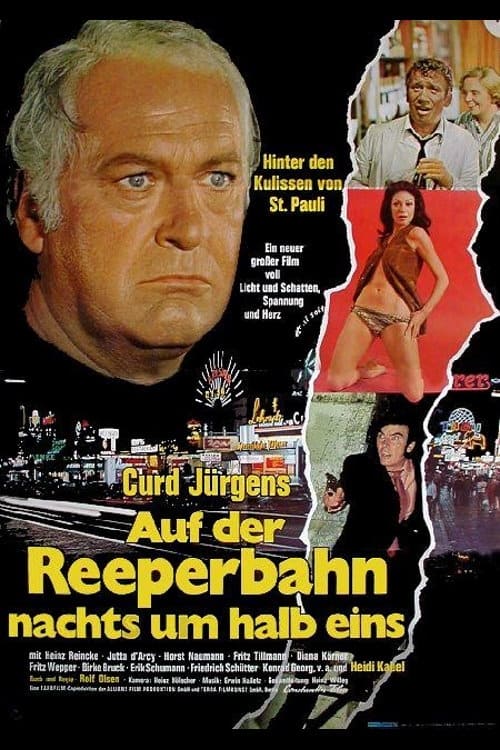
On the Reeperbahn at Half Past Midnight
1969
No user ratings available yet
Representation score: 1.8 out of 10

Representation Score
Fair
1970
Director
Rudolf Thome
Runtime
87 minutes
Average Rating
No ratings yetNew Showbiz Analysis
Rudolf Thome's work within the New German Cinema movement explores unconventional social dynamics. By placing the protagonist in a space defined by female leadership and collective action, the film disrupts traditional masculine narratives. However, the film is limited by the demographic trends of the time, showing little evidence of racial or ethnic diversity. Its focus on localized social realism suggests a narrow demographic scope typical of the period. Ultimately, the film's strength lies in its deconstruction of bourgeois stability and traditional social hierarchies through its communal setting.
Category Breakdown
The film looks at non-traditional social setups through a communal living situation. Though there's no direct depiction of same-sex relationships, the film challenges conventional domestic arrangements.
The story focuses on a female-dominated household where Peggy and her roommates shape the social reality of the film. Their collective actions drive the plot forward.
The film reflects the demographic norms of 1970 West German cinema. There is no explicit evidence of a multi-ethnic cast or diverse racial representation within the provided context.
The story highlights collective social structures over traditional family values. It questions Western institutions by emphasizing subjective morality and unconventional social agreements.
There is no evidence regarding the portrayal of physical or neurodivergent disabilities in this work.
Present on Screen
Limited or Absent
Official Synopsis
Thomas hitchhikes from Hamburg to Munich where he meets his ex-girlfriend, Peggy. Thomas doesn't have a bed for the night and goes home with Peggy, not knowing that she and her four roommates have all made a strange pact.
1969
1970
1970

1977
1971

1979
1969

1970
No reviews yet. Be the first to share your thoughts on this movie!
Use the rating form above to leave a star rating and optional review.