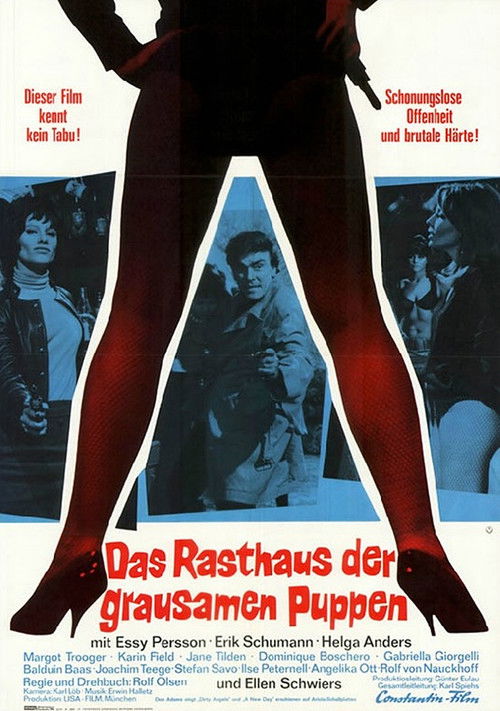
Devil's Girls
1967
No user ratings available yet
Diversity score: 2.9 out of 10

1963
NRDirector
Aram Katcher
Runtime
63 minutes
Average Rating
No ratings yetSynopsis
A sleazy but ingenious criminal masterminds a heist at a sold-out sports arena. He hires a motley crew of henchmen, seduces the middle-aged head cashier, and plans some brutal ruses to elude the law. But he's his own worst enemy.
Overall Score
Limited
Category Breakdown
LGBTQ+ Representation
The film focuses on a heterosexual dynamic centered on the seduction of a middle-aged cashier. There is no evidence of queer subtext or non-cisnormative identities.
Gender Representation
Female agency is limited, as the head cashier serves primarily as a target for the protagonist's manipulation. The narrative prioritizes the male mastermind's intellect and objectives.
Racial & Ethnic Diversity
A 'motley crew' of henchmen is mentioned, but specific character details are absent. This likely reflects mid-century archetypes rather than nuanced portrayals of people of color.
Religious & Cultural Diversity
The story explores criminality and moral ambiguity through a traditional crime-and-punishment lens. It lacks a systemic critique of institutions, focusing instead on individual greed.
Disability Representation
The narrative contains no mention of characters with visible or invisible disabilities.
Strengths
Areas for Improvement
AI Analysis
Right Hand of the Devil is a standard mid-century crime drama that adheres to the social hierarchies of 1963. The plot centers on a male criminal mastermind, leaving little room for diverse perspectives or subverting established norms. The film relies on traditional genre tropes, such as the seduction of a female character to advance a heist plot. This reinforces a narrow, heteronormative, and male-centric worldview common to the era's noir cinema. While the film touches on social transgression through its criminal themes, it fails to provide meaningful representation for marginalized groups. It functions as a conventional genre piece rather than a tool for social critique.
1967
1964
1963
1963
1962
1958

2019
1960
1963
1949
1964

2012
No reviews yet. Be the first to share your thoughts on this movie!
Use the rating form above to leave a star rating and optional review.