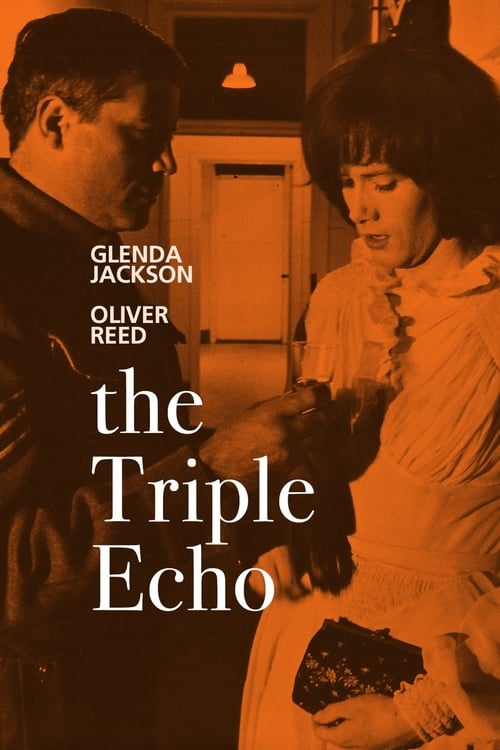
The Triple Echo
1972
No user ratings available yet
Diversity score: 4.8 out of 10

1965
Director
Georges Franju
Runtime
94 minutes
Average Rating
No ratings yetSynopsis
In the First World War, when Paris is expected to fall to the Germans, the attractive widow, Princesse de Bormes, organises a convoy of cars to evacuate the wounded from the front, and bring them back to her villa in Paris to recuperate. The authorities will not give them passes until an innocent 16-year-old boy, Guillaume Thomas de Fontenoy, joins them and is mistaken as the nephew of the popular General de Fontenoy. The Princess is enraptured by Thomas and her daughter, Henriette, falls in love with him. However Thomas feels impelled to see more of the action of the war.
Overall Score
Fair
Category Breakdown
LGBTQ+ Representation
The narrative centers on heteronormative romantic entanglements between the protagonist, the Princess, and her daughter. No explicit queer subtext or non-cisnormative identities are present.
Gender Representation
The Princess de Bormes displays significant agency by managing a convoy and villa during a national crisis. However, the plot remains anchored to the romantic pursuit of a male lead.
Racial & Ethnic Diversity
Set in a First World War French context, the story focuses on a homogeneous European social stratum. There is a lack of racial intersectionality within the primary character arcs.
Religious & Cultural Diversity
The film critiques the stability of class and lineage through its central theme of imposture. It deconstructs traditional social orders and the myth of heroic war narratives.
Disability Representation
No specific characters are shown navigating physical or neurodivergent disabilities. The presence of wounded soldiers provides a backdrop of physical trauma common to war films.
Strengths
Areas for Improvement
AI Analysis
Thomas l'imposteur is a character study that prioritizes the subversion of class hierarchies over modern intersectional markers. It uses deception to challenge the sanctity of traditional social institutions and wartime heroism. The film excels at deconstructing social identity and lineage. By focusing on an impostor, it provides a sophisticated critique of established social orders and the stability of class structures. However, the film lacks diversity in terms of race and sexual orientation. The narrative remains largely confined to a homogeneous European social stratum and traditional romantic structures.
1972
1997
1966
1946
1952

2004

2010

2017
1980
1946
1974
1983
No reviews yet. Be the first to share your thoughts on this movie!
Use the rating form above to leave a star rating and optional review.