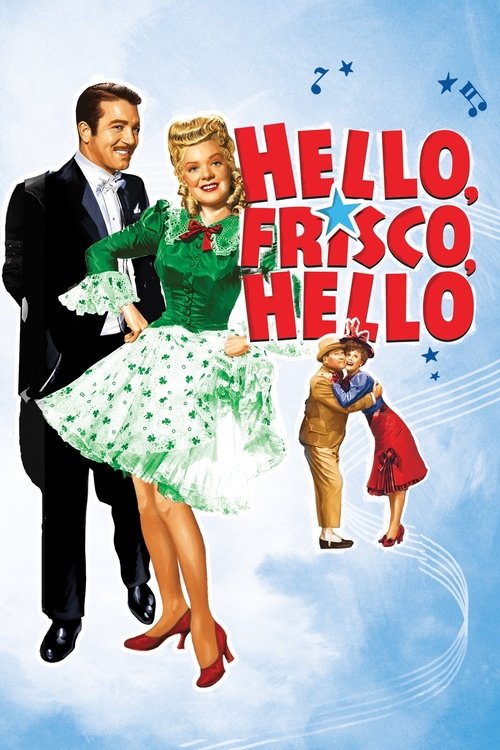
Hello, Frisco, Hello
1943
No user ratings available yet
Diversity score: 1.8 out of 10

1935
NRDirector
Roy Del Ruth
Runtime
87 minutes
Average Rating
No ratings yetSynopsis
A show troupe is engaged by Judge Culliman, who is running for Governor, to enhance his political campaign. When the inebriated Judge has to be replaced in doing his campaign speech by the troupe crooner, Eric Land, his political backers decide that they want him to run for Governor in the Judge's place. Romance, music, political corruption and the election results follow.
Overall Score
Limited
Category Breakdown
LGBTQ+ Representation
The film follows a conventional romantic trajectory between Eric Land and his girlfriend, Sally. No queer subtext or non-cisnormative identities are present.
Gender Representation
Female characters like Sally act as romantic foils or domestic catalysts. Their agency remains largely reactive to the male-driven political and musical ambitions.
Racial & Ethnic Diversity
The cast and setting reflect a homogeneous social environment. There is no evidence of non-white majority casting or efforts to disrupt traditional hierarchies.
Religious & Cultural Diversity
The story uses political corruption as a comedic backdrop for musical entertainment. It lacks a deep deconstruction of Western institutions or anti-capitalist frameworks.
Disability Representation
No characters with visible or invisible disabilities serve as central plot devices. There is no documented narrative scrutiny regarding disability.
Strengths
Areas for Improvement
AI Analysis
Thanks a Million is a quintessential 1930s musical comedy that prioritizes escapist entertainment over social commentary. The plot centers on a singer's accidental rise to political prominence, utilizing traditional tropes of romantic misunderstanding and political farce. The film adheres strictly to the era's social hierarchies and heteronormative standards. While it offers a light critique of political incompetence through an inebriated judge, it stops short of any systemic interrogation of power or institutional integrity. Ultimately, the production functions as a commercial product designed for broad appeal. It lacks intersectional complexity, focusing instead on the comedic momentum of its musical and political premise.
1943
1936
1938
1938
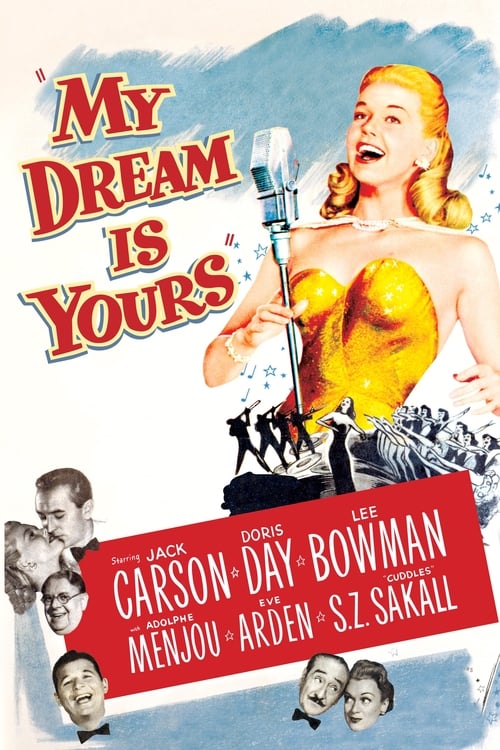
1949

1952
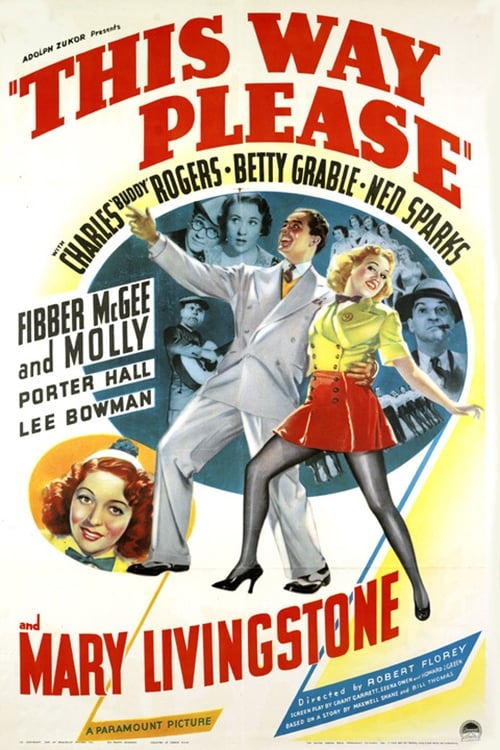
1937
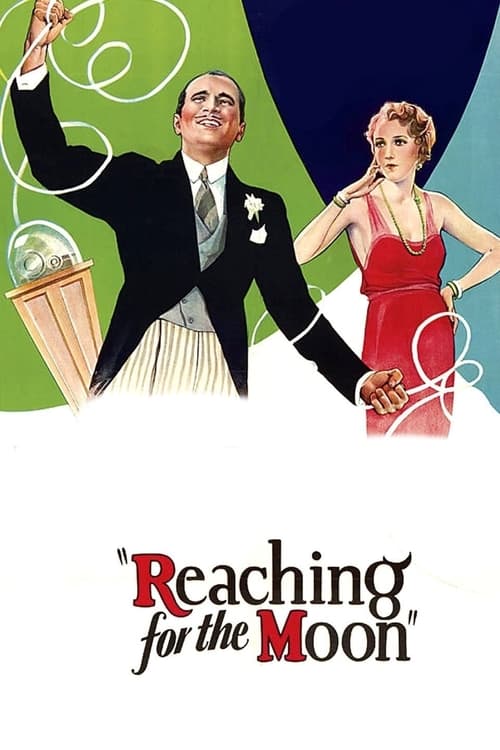
1930
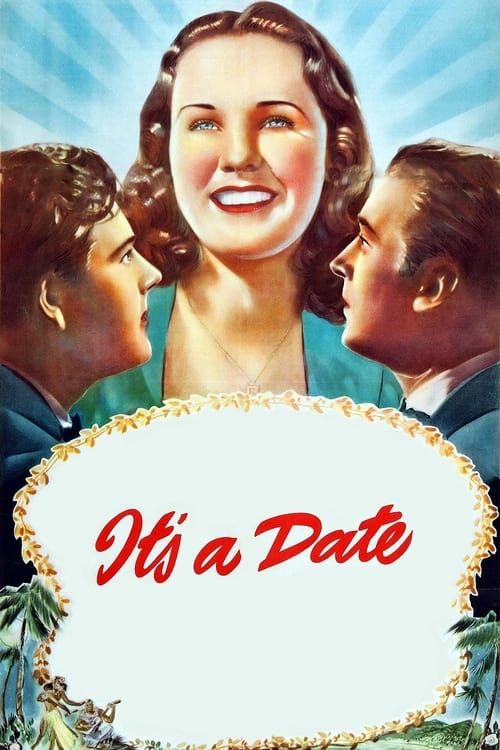
1940
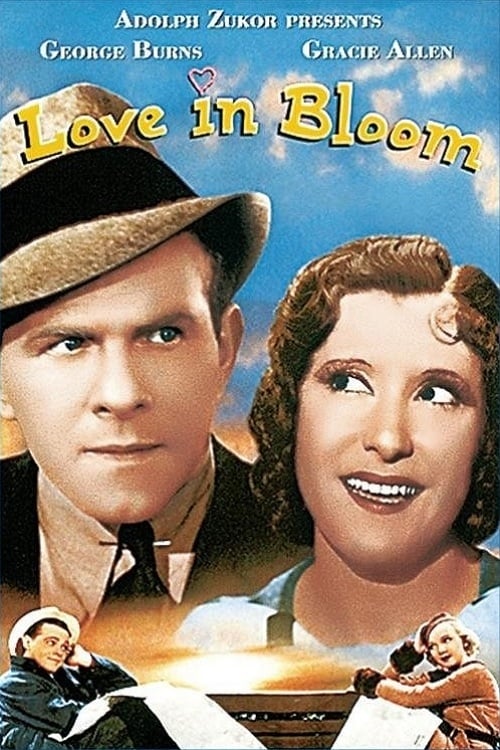
1935
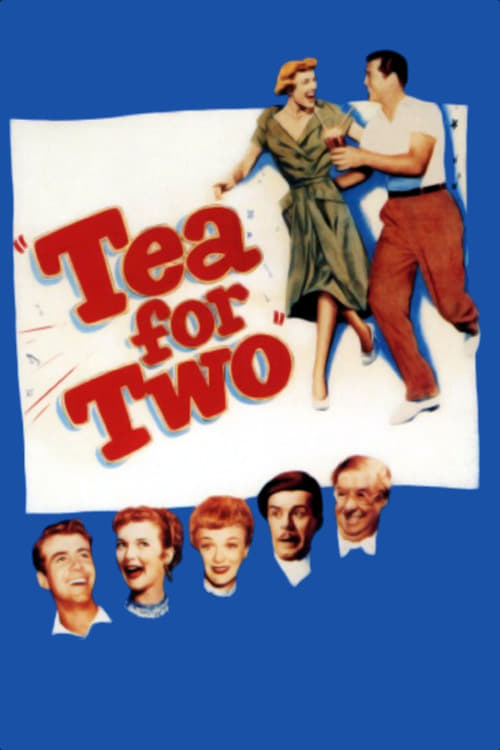
1950
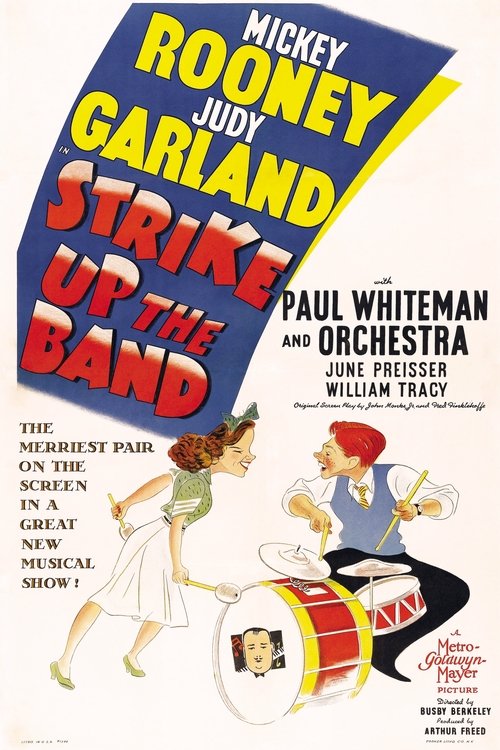
1940
No reviews yet. Be the first to share your thoughts on this movie!
Use the rating form above to leave a star rating and optional review.