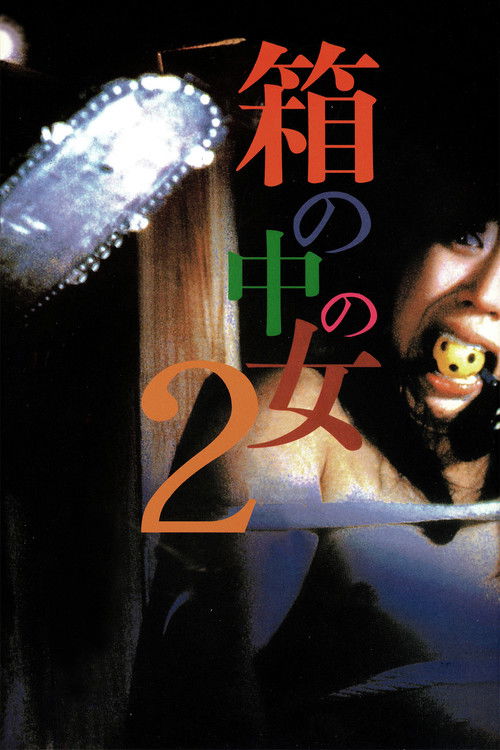
Woman in a Box 2
1988
No user ratings available yet
Representation score: 2.2 out of 10

Representation Score
Good
1987
Director
Hisayasu Satō
Runtime
63 minutes
Average Rating
No ratings yetNew Showbiz Analysis
Satō’s work uses extreme genre frameworks to explore underrepresented aspects of human desire. Despite a lack of demographic diversity, the film successfully disrupts standard genre clichés. By allowing the protagonist to influence the antagonist, the narrative challenges conventional power hierarchies. This adds a layer of psychological complexity often missing from crime horror. However, the film’s emphasis on predatory behavior can make mental instability seem like a mere tool for horror, rather than a nuanced exploration of neurodivergence.
Category Breakdown
The film focuses on a predatory relationship between a male psychopath and a female protagonist. There are no clear LGBTQ+ character arcs or critiques of the assumption that everyone is straight.
Kozue breaks the typical victim stereotype by acting in ways that deviate from expected behaviors. This creates a complex relationship where she seems to have psychological control over her captor.
As a 1987 Japanese production, the film has a cast that is culturally uniform. It avoids harmful stereotypes but does not explore diverse ethnic identities.
The narrative emphasizes moral relativism and psychological realism. It examines social dysfunction and isolation through a lens of subjective morality.
Psychological instability is portrayed through the lens of a psychopath. These traits are used as horror plot devices rather than nuanced representations of neurodivergence.
Present on Screen
Limited or Absent
Official Synopsis
High school student Kozue spreads flyers in search of her missing classmate. A psychopath lures her to his place, where he imprisons her. The psychopath gets his kicks by raping his victims with a chrome vibrator, poisoning them then photographing them as they die. However, when Kozue doesn’t act like his typical victims they start up a strange and twisted relationship.
1988

2001

1995
1995
1990
1991
2003
1986
No reviews yet. Be the first to share your thoughts on this movie!
Use the rating form above to leave a star rating and optional review.