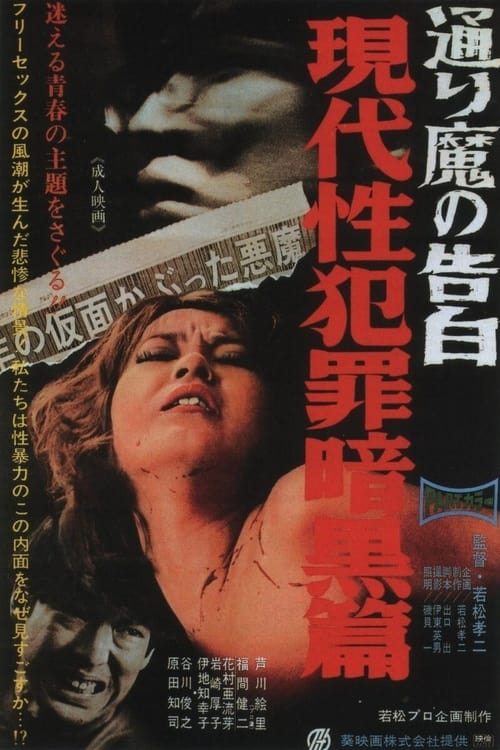
Dark Story of a Sex Crime: Phantom Killer
1969
No user ratings available yet
Representation score: 4.8 out of 10
Representation Score
Fair
1966
Director
Kōji Wakamatsu
Runtime
72 minutes
Average Rating
No ratings yetNew Showbiz Analysis
Kōji Wakamatsu’s work is defined by its radical departure from mainstream cinematic norms. This film utilizes extreme imagery to dissect systemic violence and psychological fragmentation, positioning it as a transgressive piece of independent Japanese cinema. While the film lacks diverse demographic representation in a modern sense, it is highly subversive. It deconstructs the sanctity of the domestic sphere and rejects conventional morality, opting instead for a critique of established power structures. The score reflects a work that is culturally anti-institutional. It prioritizes the exploration of the darker, more chaotic elements of the human condition over the reinforcement of civic or religious ideals.
Category Breakdown
The film focuses on a volatile and coercive heterosexual relationship. There is no depiction of non-traditional gender identities or same-sex intimacy.
The movie centers on a violent power imbalance and female victimization. Despite critiquing patriarchal structures, the focus remains on physical subjugation.
As a 1966 Japanese production, the film operates within a specific cultural context. It challenges mainstream studio uniformity through its underground independent status.
The film rejects traditional social cohesion and stable family units. It portrays the domestic space as a site of cruelty rather than a sanctuary.
There is no documented evidence regarding the portrayal of physical or neurodivergent disabilities.
Present on Screen
Limited or Absent
Official Synopsis
A man keeps his girlfriend tied up in his small apartment and tortures her. She is undressed, subjected to various types of bondage, whipped, and tortured with a razor blade.
1969

1969

1981

1964

1981

1974
1969

1969
No reviews yet. Be the first to share your thoughts on this movie!
Use the rating form above to leave a star rating and optional review.