Osceola
1971
No user ratings available yet
Diversity score: 5.6 out of 10
1982
Director
Igor Auzins
Runtime
134 minutes
Average Rating
No ratings yetSynopsis
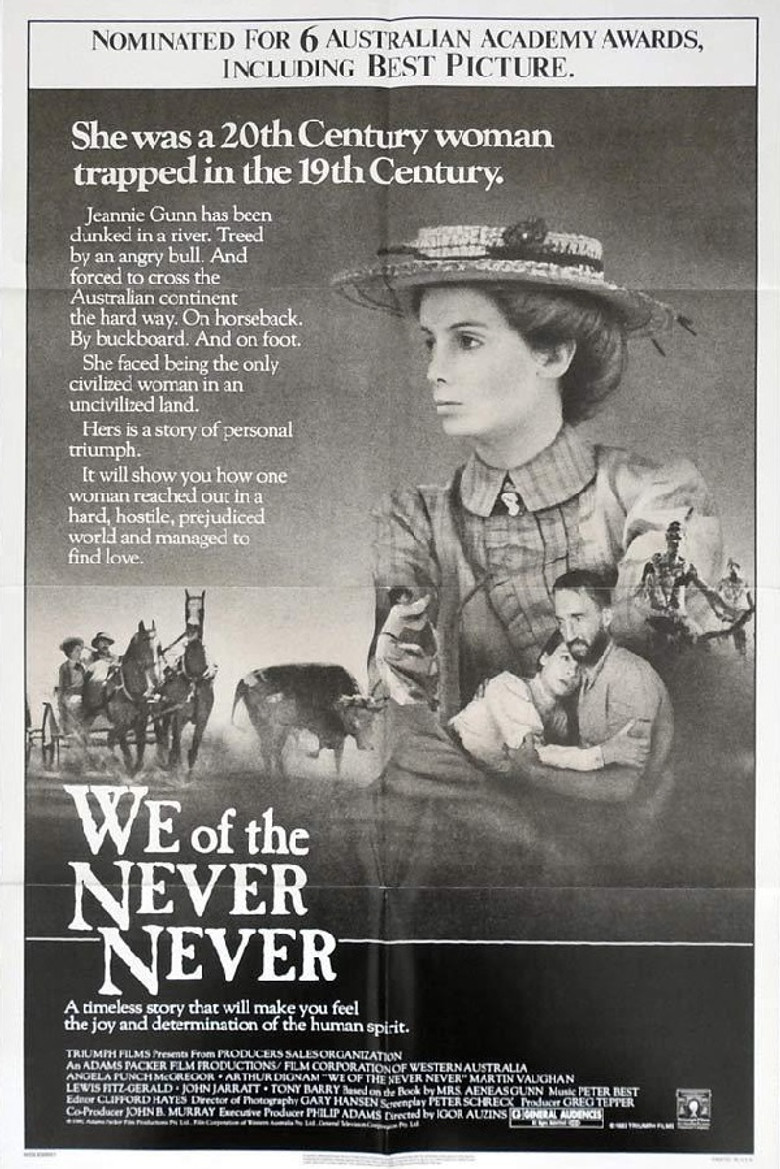
Based on the well-loved Australian classic by Mrs. Aeneas Gunn, this is the remarkable true story of Jeannie Gunn, a woman who fought to overcome sexual and racial prejudice amid the harsh beauties of the outback. Leaving her Melbourne existence for a new life on her husband's isolated ranch, Jeannie's feisty, good-natured attitude soon wins over the misogynistic stockmen, but she faces a much tougher challenge in trying to change their racist attitudes towards the indigenous aboriginal population.
Overall Score
Fair
Category Breakdown
LGBTQ+ Representation
The film contains no LGBTQ+ characters or non-heteronormative identities. The story focuses exclusively on the central protagonists and the established social structures of the 19th-century outback.
Gender Representation
Jeannie Gunn serves as a central agent of change, challenging the misogynistic environment of the stockmen. However, secondary plots involving young boys shift the focus toward male-centric survival narratives.
Racial & Ethnic Diversity
The narrative critiques systemic racism by centering the struggle between white and Indigenous characters. It grants agency to the Indigenous experience, framing their connection to the land as vital and sophisticated.
Religious & Cultural Diversity
The film critiques the constraints of civilized Western life by favoring the natural world over urban existence. It suggests a deconstruction of traditional Western institutional control through primal independence.
Disability Representation
There are no prominent depictions of visible or invisible disabilities within the narrative.
Strengths
Areas for Improvement
AI Analysis
We of the Never Never uses the Western genre to examine the friction between colonial expansion and Indigenous presence. It avoids presenting the frontier as a monolithic white space, instead highlighting the complexity of racial dynamics and the agency of women. The film's strength lies in its disruption of the 'heroic settler' trope. By emphasizing the need to overcome prejudice, the story validates non-Western connections to the environment. While the 1982 production context limits its modern intersectional breadth, the film remains a meaningful critique of the social hierarchies and racial prejudices of the era.
1971
1934
1983

1943
1992
1947
1969
1976

1979
2022
2017
1971
No reviews yet. Be the first to share your thoughts on this movie!
Use the rating form above to leave a star rating and optional review.