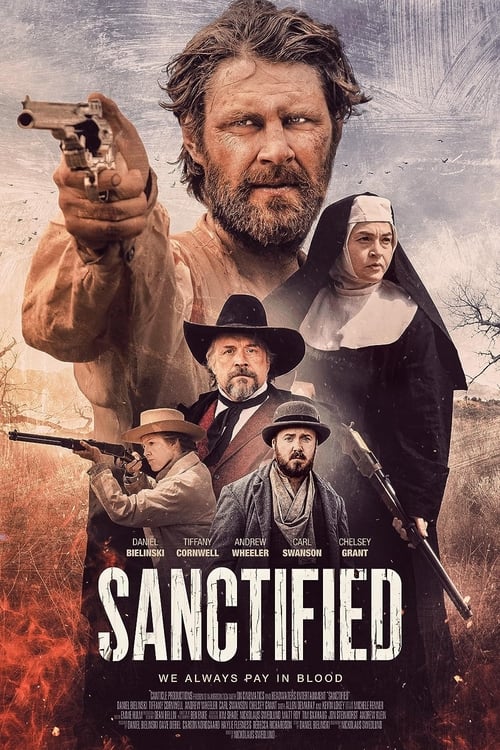
Sanctified
2022
No user ratings available yet
Diversity score: 4.9 out of 10

2022
Director
Leah Purcell
Runtime
109 minutes
Average Rating
No ratings yetSynopsis
In 1893, heavily pregnant Molly Johnson and her children struggle in isolation to survive the harsh Australian landscape after her husband left to go droving sheep in the high country. One day, she finds a shackled Aboriginal fugitive named Yakada wounded on her property. As an unlikely bond begins to form between them he reveals secrets about her true identity. Realizing Molly’s husband is actually missing, new town lawman Nate Clintoff starts being suspicious and sends his constable to investigate.
Overall Score
Excellent
Category Breakdown
LGBTQ+ Representation
The film lacks explicit LGBTQ+ characters or non-heteronormative romantic arcs. While it explores deep emotional intimacy between characters, it does not engage with queer identity.
Gender Representation
Molly Johnson disrupts frontier hierarchies by acting as the central agent of survival. The narrative prioritizes female agency and resilience over traditional masculine tropes.
Racial & Ethnic Diversity
This landmark film centers Indigenous lived experience by casting Leah Purcell. It uses the character Yakada to provide a profound critique of colonial displacement and systemic violence.
Religious & Cultural Diversity
The story critiques colonial institutions as instruments of oppression rather than order. It frames the settler-colonial framework as inherently corrupt through a post-colonial lens.
Disability Representation
The narrative focuses on the physical toll of survival and violence. However, it does not center specific neurodivergent or physical disabilities as primary drivers.
Strengths
Areas for Improvement
AI Analysis
Leah Purcell’s film is a powerful reclamation of the Australian Western, successfully deconstructing colonial mythologies. By centering an Indigenous woman as the protagonist, the film shifts the genre's focus from Anglo-centric traditions to a nuanced exploration of systemic oppression. The production excels in its intersectional approach, particularly through its portrayal of female agency and racial identity. Molly Johnson is depicted as a capable matriarch rather than a domestic appendage, providing a radical departure from traditional frontier narratives. While the film lacks LGBTQ+ representation and specific disability-focused storylines, its strength lies in its sophisticated critique of historical power structures. It effectively replaces the 'bush myth' with a complex, post-colonial perspective.
No reviews yet. Be the first to share your thoughts on this movie!
Use the rating form above to leave a star rating and optional review.