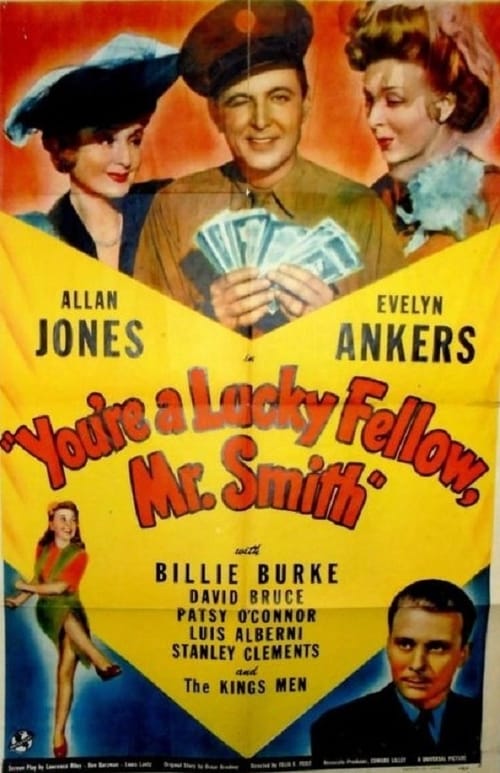
You're a Lucky Fellow, Mr. Smith
1943
No user ratings available yet
Representation score: 0.4 out of 10
Representation Score
Minimal
1944
ApprovedDirector
Leslie Goodwins
Runtime
68 minutes
Average Rating
No ratings yetNew Showbiz Analysis
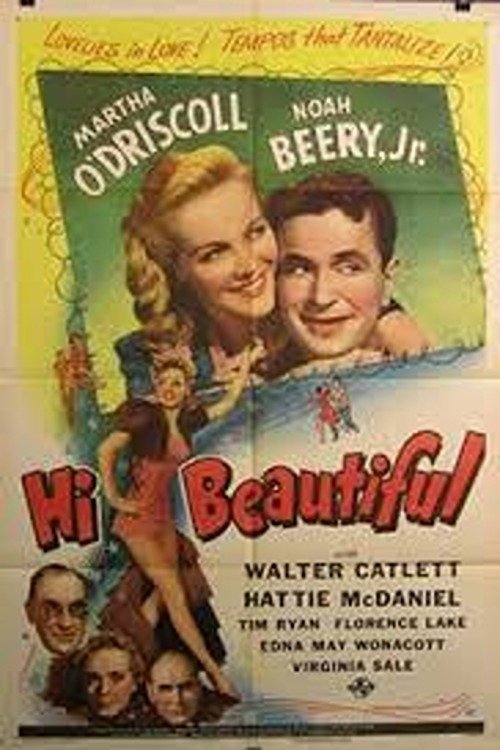
Hi, Beautiful is a product of the mid-century studio system, emphasizing traditional romantic clichés and conventional social structures. The plot serves as a vehicle for wartime values, transitioning from cohabitation to a sanctioned marital union. The film relies on standard genre structures of the 1940s. While the female lead displays some ability to act, the narrative ultimately reinforces existing social hierarchies and traditional family models. Overall, the film lacks meaningful diversity, reflecting the era's focus on homogeneous casting and the reinforcement of established social norms.
Category Breakdown
The film focuses on a heterosexual relationship between Patty Callahan and Jeff. There are no queer subtexts or representations of non-straight identities in the narrative.
Patty Callahan initiates the plot by offering residence to Jeff, showing some ability to act. However, the story follows a conventional path leading to formal marriage.
The production reflects the era's lack of racial diversity in lead roles. It adheres to the homogeneous casting norms typical of 1944 studio films.
The narrative emphasizes traditional Western social institutions and the sanctity of marriage. It promotes conventional morality and wartime social cohesion through its romantic focus.
There are no characters with physical or neurodivergent disabilities within the film's context.
Present on Screen
Limited or Absent
Official Synopsis
Part of the series of Universal B-musicals teaming Martha O'Driscoll and Noah Beery Jr., this film is also a remake of the 1937 comedy Love in a Bungalow. Patty Callahan (O'Driscoll) offers residence in a model home to soldier Jeff (Beery) and soon falls in love with him. Although the pair are unmarried, they enter a marital contest intended to celebrate the "Happiest G.I. Couple." Winning the contest brings on all sorts of farcical troubles until the couple are able to be united for real. Songs include "Don't Sweetheart Me" and "Best of All."
1943
1954
1941
1943
1941
1943
1933
1946
No reviews yet. Be the first to share your thoughts on this movie!
Use the rating form above to leave a star rating and optional review.