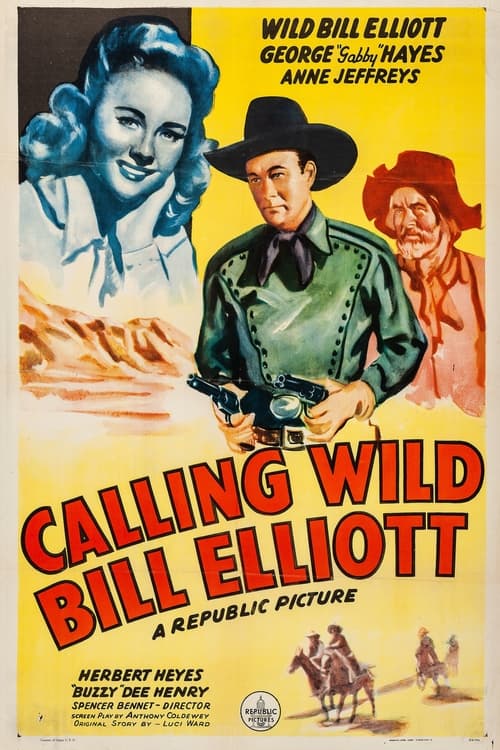
Calling Wild Bill Elliott
1943
No user ratings available yet
Representation score: 1.8 out of 10
Representation Score
Minimal
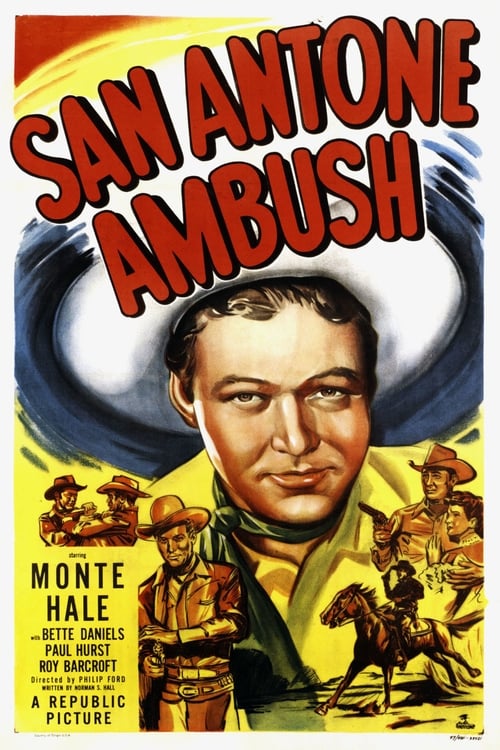
1949
ApprovedDirector
Philip Ford
Runtime
60 minutes
Average Rating
No ratings yetNew Showbiz Analysis
San Antone Ambush is a typical mid-century B-movie Western that emphasizes genre clichés over social complexity. The plot follows a standard redemption arc where a Lieutenant seeks to clear his name after being falsely accused of a massacre. The film relies on a traditional framework of individualist heroism. It pits personal honor against institutional corruption, specifically through the lens of a ruthless Commissioner and his excessive taxes. Ultimately, the work functions as a period-typical genre piece. It adheres to the social constraints of 1949, focusing on linear narratives of justice rather than the representation of underrepresented identities.
Category Breakdown
The film does not include any characters with LGBTQ+ identities. The story revolves around male-centric conflicts and frontier justice.
Male characters, particularly the Texan and the Lieutenant, have significant roles in driving the plot. Female characters do not play a leading role in the story.
The story focuses on a conflict between white protagonists and a Commissioner. It does not provide specific details about non-Anglo-Saxon characters.
The film explores skepticism towards institutional corruption and excessive taxation. However, it resolves through traditional Western values emphasizing individual merit.
There is no mention of characters dealing with physical or neurodivergent conditions. The narrative does not address disability.
Present on Screen
Limited or Absent
Official Synopsis
Just after the Civil War a Texan and his men are fighting a ruthless Commissioner and his excessive taxes. After a Lieutenant is falsely accused of a pay wagon massacre by the Commissioner's men, he deserts the Army and tries to clear himself. At first he belives the Texan was behind the massacre but then learns it was the Commissioner and joins the Texan in his fight.
1943
1949
1941
1943
1948
1945

1948
1953
No reviews yet. Be the first to share your thoughts on this movie!
Use the rating form above to leave a star rating and optional review.