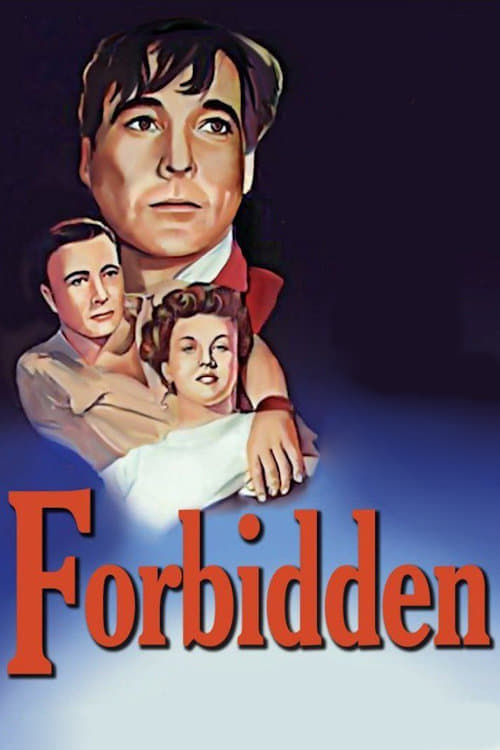
Forbidden
1949
No user ratings available yet
Diversity score: 2.6 out of 10

1961
Director
Montgomery Tully
Runtime
68 minutes
Average Rating
No ratings yetSynopsis
A composer (Laurence Payne) is stuck in a middle-class marriage and finds that his affair with his wife's half-sister (Jane Griffiths) has resulted in a pregnancy. When his wife refuses to give him a divorce he hatches a murder scheme that is too clever by half.
Overall Score
Limited
Category Breakdown
LGBTQ+ Representation
The film operates within a strictly heteronormative framework. The central conflict revolves around a heterosexual affair and pregnancy, offering no presence of non-cisnormative identities.
Gender Representation
Agency is concentrated in the male protagonist's calculating murder scheme. While the wife exerts domestic power by refusing a divorce, she lacks professional or intellectual autonomy.
Racial & Ethnic Diversity
The setting reflects a homogeneous Anglo-Saxon social environment. There is no evidence of racial blending or non-white casting within this middle-class demographic.
Religious & Cultural Diversity
The narrative focuses on the disruption of the nuclear family and marriage. It treats moral failings through a conventional lens of guilt rather than systemic critique.
Disability Representation
There is no documented evidence of characters with visible or invisible disabilities in this production.
Strengths
Areas for Improvement
AI Analysis
The film is a conventional mid-century thriller that prioritizes genre-driven suspense over social exploration. It adheres to the established social mores of 1961 British cinema, focusing on a middle-class domestic crisis. Representation is limited by the era's standards, centering on a homogeneous, Western demographic. The narrative reinforces traditional masculine roles through the protagonist's strategic decision-making and maintains a standard heteronormative structure. Ultimately, the work functions as a product of its time, maintaining the social status quo without attempting to deconstruct or expand the cultural landscape.
1949
1946
1947
1947
1994

1962
1972
1947
1958
1954
1950
1973
No reviews yet. Be the first to share your thoughts on this movie!
Use the rating form above to leave a star rating and optional review.