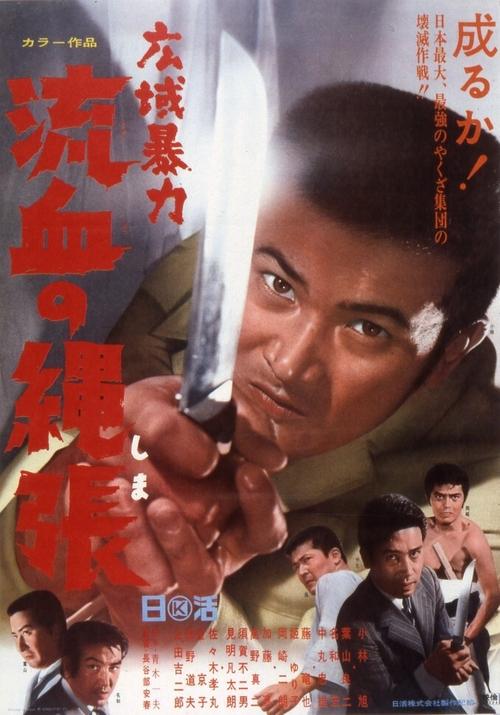
Bloody Territories
1969
No user ratings available yet
Diversity score: 4.2 out of 10
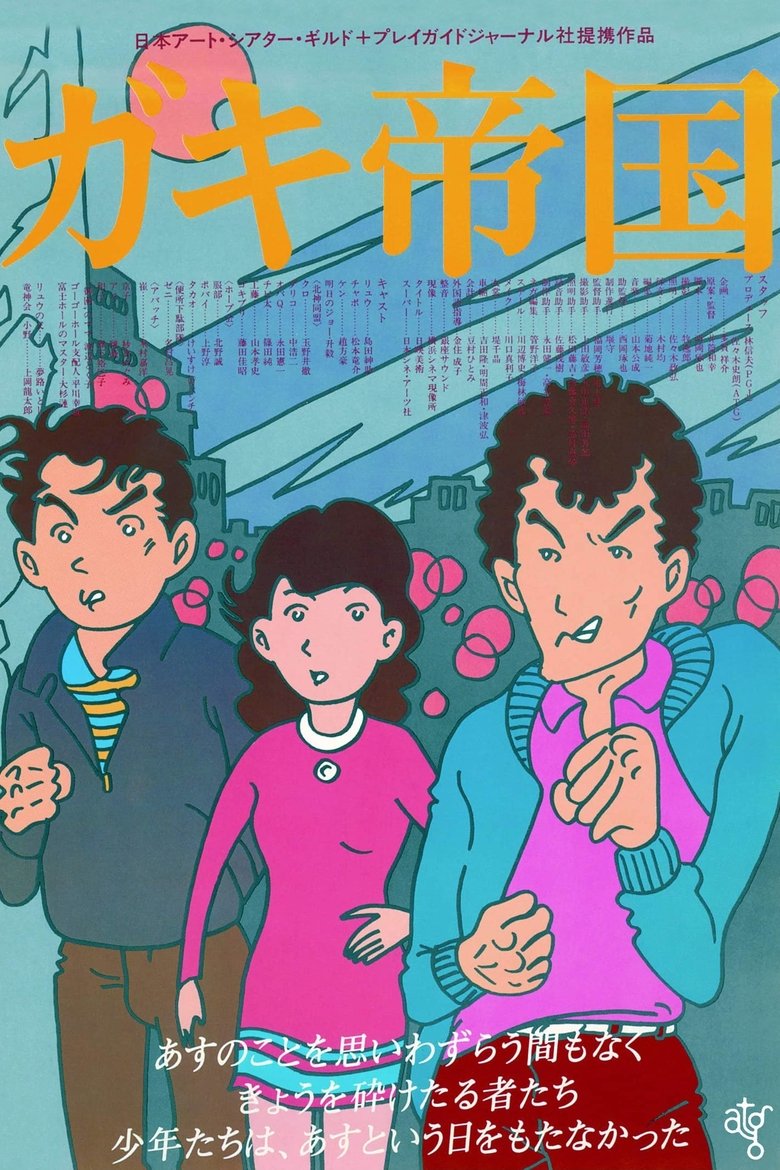
1981
Director
Kazuyuki Izutsu
Runtime
115 minutes
Average Rating
No ratings yetSynopsis
Following a stint in reform school, Ryu (Shinsuke Shimada) returns to his home, the Minami area of Osaka, accompanied by his new friend Ko (Takeshi Masu). He's greeted by his friends, Chabo (Ryusuke Matsumoto) and Ken (Bang-ho Cho). They seek to forge their own path through a multitude of rival gangs in Kita and Minami, including the Hokushin Alliance, backed by the yakuza, the Hope Association, and various other minor factions, including Zainichi Korean groups. What follows is a wild, fast-paced story of violence, revenge, betrayal, and discrimination, that never loses its sense of humor.
Overall Score
Fair
Category Breakdown
LGBTQ+ Representation
The film focuses strictly on the hyper-masculine social codes of adolescent street gangs. There is no discernible presence of queer subtext or non-cisnormative identities within the character arcs.
Gender Representation
The narrative is almost entirely devoid of female agency, centering instead on male-only spaces. This reinforces a traditional gender hierarchy by excluding female perspectives from the central conflict.
Racial & Ethnic Diversity
Meaningful representation is achieved through Zainichi Korean characters like Ken. Their presence is integrated into the gang hierarchies, providing a nuanced look at ethnic minority agency in Osaka.
Religious & Cultural Diversity
The film challenges traditional authority by highlighting the friction between communal street life and urban modernization. It portrays delinquency as a legitimate response to a shifting socioeconomic landscape.
Disability Representation
There are no prominent depictions of physical or neurodivergent disabilities that drive the narrative or function as central character traits.
Strengths
Areas for Improvement
AI Analysis
Empire of Kids is a gritty exploration of adolescent social hierarchies in 1960s Osaka. It succeeds in complicating the depiction of a homogeneous society by integrating Zainichi Korean characters into the core struggle for territory and identity. However, the film is heavily limited by its hyper-masculine focus. The near-total absence of female agency and queer identities restricts the narrative to a very narrow social sphere. Ultimately, the film's strength lies in its socio-cultural critique of authority and its nuanced ethnic representation, which offsets its lack of gender and LGBTQ+ diversity.
1969
2005
1979
1997

1972

2001
1977
1975
1988
1994
1998
1971
No reviews yet. Be the first to share your thoughts on this movie!
Use the rating form above to leave a star rating and optional review.