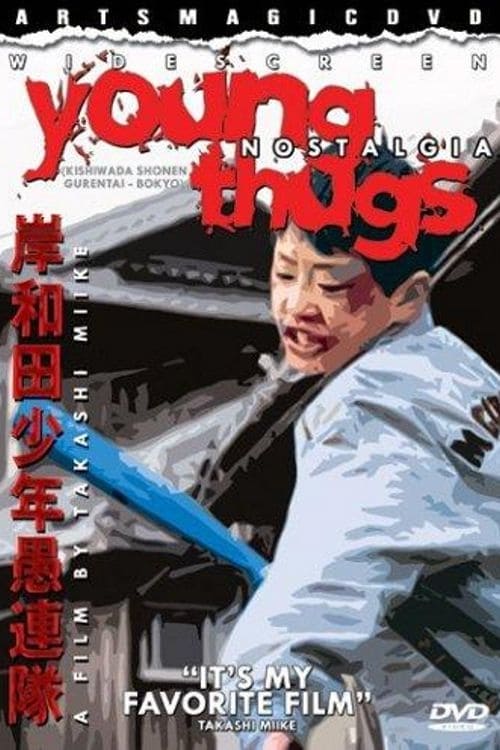
Young Thugs: Nostalgia
1998
No user ratings available yet
Representation score: 5.6 out of 10
Representation Score
Fair
2005
Director
Kazuyuki Izutsu
Runtime
118 minutes
Average Rating
No ratings yetNew Showbiz Analysis
The film excels at deconstructing social homogeneity by focusing on the intersection of Japanese and Korean identities. It uses a localized high school conflict to explore broader themes of multiculturalism and systemic ethnic tension. However, the narrative structure relies heavily on men's control over the story. While female characters serve as catalysts, they primarily function as the impetus for male-driven plots rather than fully autonomous leads. Overall, the work provides a nuanced look at communal identity and social friction, though it lacks representation for LGBTQ+ identities and disability.
Category Breakdown
The film does not include any explicit LGBTQ+ characters or non-straight relationships. The narrative focuses on ethnic tensions and adolescent social dynamics.
Female characters play a key role in driving the plot's moral direction. However, the main ability to act remains with the male protagonists.
The film centers on the friction between Japanese and Korean students, exploring systemic tensions and multicultural coexistence through ethnic identity.
The story highlights the fragility of peace in a diverse setting. It uses sports to critique rigid social hierarchies and institutional discipline through restorative justice.
There is no discernible evidence regarding the portrayal of physical or neurodivergent disabilities in the provided context.
Present on Screen
Limited or Absent
Official Synopsis
Romeo, A.K.A. Kosuke Matsuyama, is a second-year high school student. A nice, normal, nonviolent type, he suddenly finds himself in the middle of a rampaging crowd of Korean boys, outraged by insults perpetrated by several of his idiotic class-mates on two Korean girls. He makes a narrow escape, but soon after, he and his best bud Yoshio are sent by their home-room teacher to invite the Korean students to a friendly soccer game as a way of restoring the peace.
1998
2007
1981
1996

2013
2003
2015
2006
No reviews yet. Be the first to share your thoughts on this movie!
Use the rating form above to leave a star rating and optional review.