
Bloody Territories
1969
No user ratings available yet
Representation score: 3.0 out of 10
Representation Score
Fair
1988
Director
Yoshimitsu Morita
Runtime
102 minutes
Average Rating
No ratings yetNew Showbiz Analysis
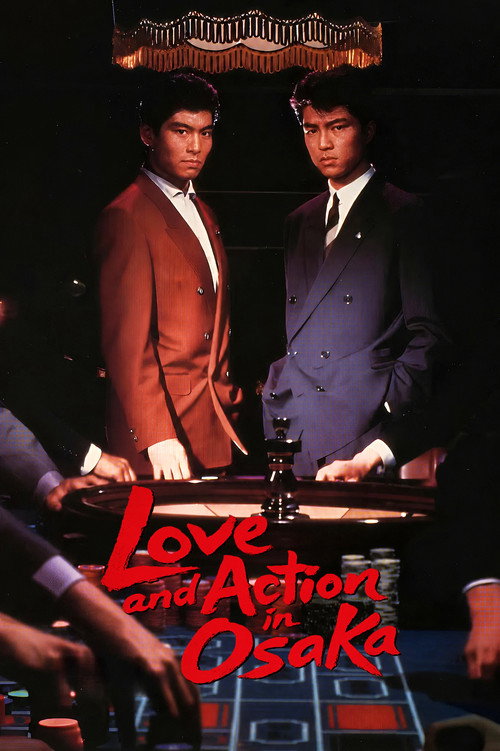
Love and Action in Osaka functions as a genre-bending study of the friction between modern professional life and ancestral violence. It presents lineage as a disruptive burden rather than a source of stability, subverting traditional family structures. However, the film remains anchored in conventional masculine power dynamics, limiting its breadth of social exploration. While it offers a sophisticated critique of social determinism, it lacks visible representation of underrepresented identities or diverse ethnic perspectives.
Category Breakdown
The film touches on non-traditional life paths but does not explicitly depict queer identities or same-sex relationships.
The story heavily relies on masculine clichés and patriarchal violence. It centers on male-dominated hierarchies and the protagonist's struggle with his father's legacy.
The cast is ethnically uniform, reflecting the localized Japanese setting. The narrative focuses on domestic social hierarchies without diverse ethnic representation.
The film critiques traditional kinship by portraying the family as a source of conflict. It contrasts individualistic professional identity with inherited clan-based morality.
There is no discernible portrayal of physical or neurodivergent disabilities within the narrative.
Present on Screen
Limited or Absent
Official Synopsis
Despite his efforts of living a normal life as a banker, the life of Toru, the only son of the Yubari Family, becomes disrupted by trouble brought on by his father. When his father’s battle against his rival group the Miike Family ignites, Toru becomes more involved in the turf war than he wished for.
1969
1973
1974
2017

2001
1974
1973
1989
No reviews yet. Be the first to share your thoughts on this movie!
Use the rating form above to leave a star rating and optional review.