
The Man Who Had His Hair Cut Short
1966
No user ratings available yet
Diversity score: 4.3 out of 10
1968
Director
Jack Bond
Runtime
93 minutes
Average Rating
No ratings yetSynopsis
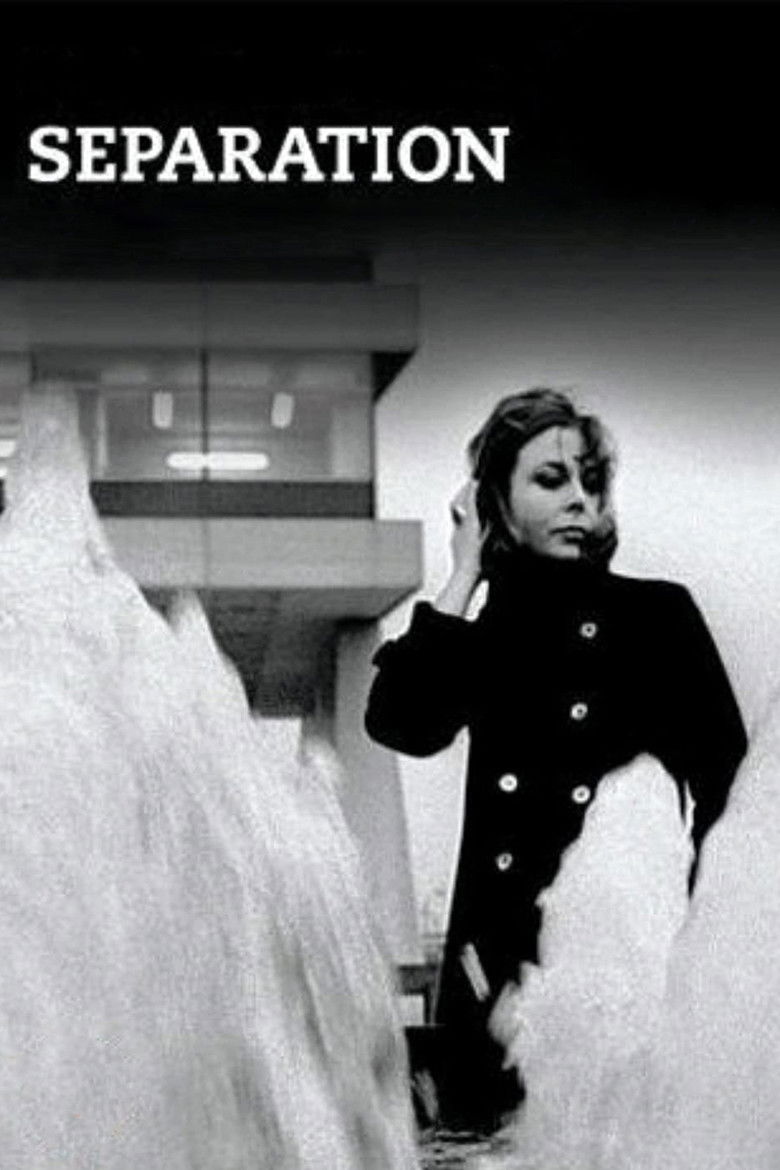
Separation concerns the inner life of a woman during a period of breakdown – marital, and possibly mental. Her past and (possible?) future are revealed through a fragmented but brilliantly achieved and often humorous narrative, in which dreams and desires are as real as the ‘swinging’ London (complete with Procul Harum music and Mark Boyle light show) of the film’s setting.
Overall Score
Fair
Category Breakdown
LGBTQ+ Representation
The film prioritizes surreal dreamscapes and internal desires over explicit identity politics. While the Swinging London setting suggests loosening social mores, there is no overt evidence of non-cisnormative identities or same-sex intimacy.
Gender Representation
The narrative challenges traditional hierarchies by focusing on the breakdown of marital structures and domestic roles. However, female agency remains secondary to the protagonist's internal psychological dissolution.
Racial & Ethnic Diversity
The film depicts a predominantly homogeneous, middle-class urban environment. It reflects the demographic constraints of 1968 London without utilizing diverse casting or a non-Anglo-Saxon majority.
Religious & Cultural Diversity
The film engages with postmodern themes by critiquing modern urban reality. Its use of surrealism and fragmented identity serves as a subtle critique of traditional social institutions and cohesion.
Disability Representation
The film offers a nuanced portrayal of mental health by centering the protagonist's fractured psyche. It avoids using psychological instability as a mere plot device or source of mockery.
Strengths
Areas for Improvement
AI Analysis
Jack Bond’s *Separation* is a formalist exploration of alienation within the landscape of Swinging London. It succeeds by using a fragmented, non-linear architecture to prioritize subjective psychological states over rigid social realism. While the film lacks overt demographic diversity regarding race and LGBTQ+ identities, it finds progressive value in its stylistic subversion. It challenges the stability of Western social frameworks by focusing on the individual's internal collapse. Ultimately, the work functions as a postmodern study of the disconnect between the individual and modern urban structures, using avant-garde techniques to critique societal cohesion.
1966
1960

1961

1963
1967
1970
1977

1974

1967

1977

1970

1961
No reviews yet. Be the first to share your thoughts on this movie!
Use the rating form above to leave a star rating and optional review.