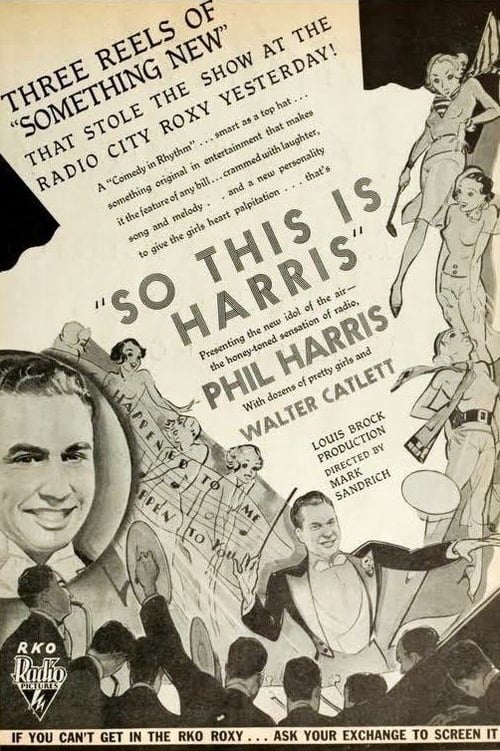
So This Is Harris!
1933
No user ratings available yet
Representation score: 0.4 out of 10
No Poster Available
Representation Score
Minimal
1933
PassedDirector
Monte Brice, Laurence Schwab
Runtime
90 minutes
Average Rating
No ratings yetNew Showbiz Analysis
Take a Chance is a product of the early 1930s studio system, designed for escapist musical comedy. The film reinforces the social hierarchies of its era rather than challenging them through diverse or storytelling that reflects multiple aspects of identity. The narrative is driven by male protagonists, leaving little room for significant female roles or diverse racial representation. It follows a standard Broadway adaptation model that favors a homogeneous cast and conventional social norms. Ultimately, the film serves as a period-typical entertainment piece, lacking the subversive elements or systemic critiques necessary to move beyond the narrow demographic focus of its time.
Category Breakdown
The film does not depict any non-binary or LGBTQ+ identities. It adheres to the heterosexual and cisgender norms typical of 1933 musical comedies.
The story focuses on male characters, James Dunn and Cliff Edwards, who drive the plot. Women play minor roles and do not challenge traditional gender norms.
The cast appears to be predominantly white, with no indication of diverse racial or ethnic representation. There is no evidence of race-bent casting.
The story presents light-hearted escapism without critiquing Western institutions. It centers on individual mischief without addressing systemic issues.
There is no documented evidence of characters with visible or invisible disabilities in this production.
Present on Screen
Limited or Absent
Official Synopsis
Take a Chance was based on the hit Broadway musical of the same name, though only one of the original songs, Eadie Was a Lady, has been retained. The thinnish plot involves the misadventures of a pair of pickpockets, played on Broadway by Jack Haley and Sid Silvers and on film by James Dunn and Cliff “Ukelele Ike” Edwards.
1933
1941
1933
1929
1933

1931
1936
1933
No reviews yet. Be the first to share your thoughts on this movie!
Use the rating form above to leave a star rating and optional review.