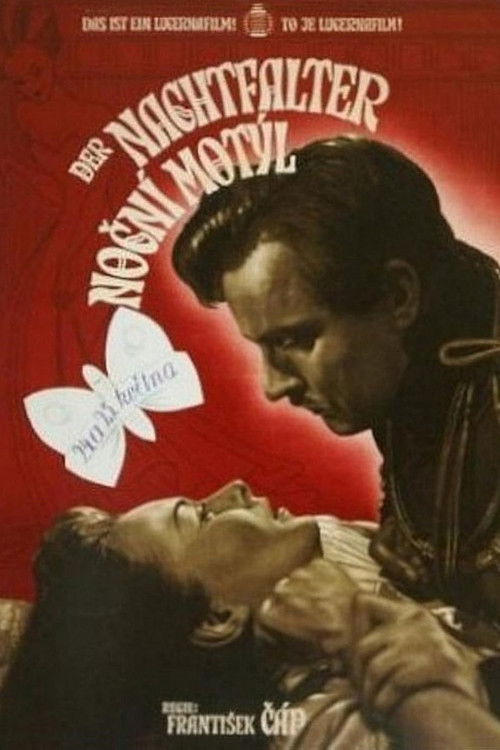
Nocturnal Butterfly
1941
No user ratings available yet
Representation score: 3.2 out of 10
Representation Score
Limited
1942
15Director
Dezső Ákos Hamza
Runtime
97 minutes
Average Rating
No ratings yetNew Showbiz Analysis
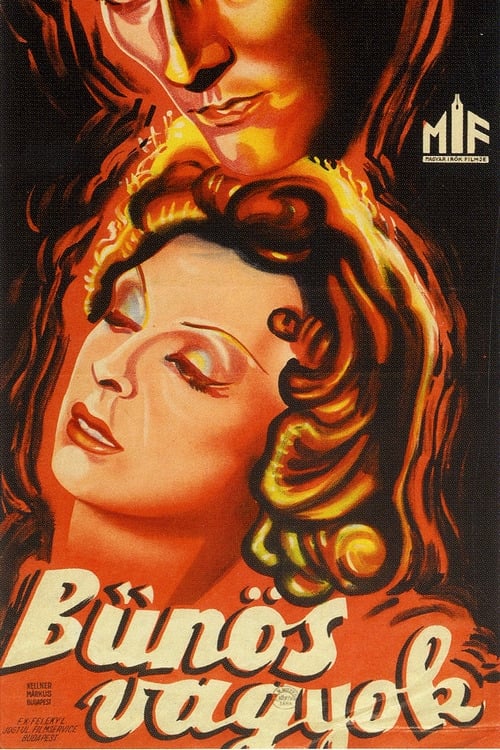
Bűnös vagyok! is a period drama that closely follows the social and romantic norms of the early 1940s. The narrative centers around a male architect torn between an unreachable bride and a pursuing singer, emphasizing personal emotional conflicts over broader societal critiques. The film adheres to the demographic and social norms of mid-century Hungary, using traditional gendered clichés where female characters play significant roles within a romantic conflict. Female characters' involvement is limited to their relationships with the male protagonist. Ultimately, the work functions as a conventional melodrama, lacking representation of multiple aspects of diversity. It focuses on the tension between professional obligations and personal desires within a standard straight-centered framework.
Category Breakdown
The film focuses on a typical love triangle involving three characters. There are no representations of non-straight or non-cisgender identities, nor any critiques of the assumption that everyone is straight or cisgender.
Female characters are mainly defined by their relationships to the male lead. Lola shows significant involvement in her pursuit of the protagonist, but the power dynamics follow traditional romantic conventions from the mid-20th century.
The story reflects the homogeneous demographics of 1942 Hungary, focusing on social classes within the country without showcasing a multi-ethnic cast.
The plot emphasizes personal ethical decisions and romantic morality. It follows traditional dramatic structures without addressing broader socio-political issues.
The story does not include any characters with visible or invisible disabilities.
Present on Screen
Limited or Absent
Official Synopsis
Miklós is a young, talented and thoughtful architect who is all about his work. He doesn't loiter or run after women, but he is also eager to have a happy family. When it comes to building a new villa, he falls madly in love with the future owner, Klara. She is also attracted to him, but Klara is already a bride and can't decide what she wants. In this impossible situation, Miklós seeks solace in a singer, Lola, despite his love for Klárit. Lola feels this too, and wants to attract him by any means possible...
1941
1945
1972

1952
1938

1950

1933
1958
No reviews yet. Be the first to share your thoughts on this movie!
Use the rating form above to leave a star rating and optional review.