Maryuu Senki
1987
No user ratings available yet
Representation score: 7.3 out of 10
Representation Score
Good
2023
Director
Gou Koga
Runtime
104 minutes
Average Rating
No ratings yetNew Showbiz Analysis
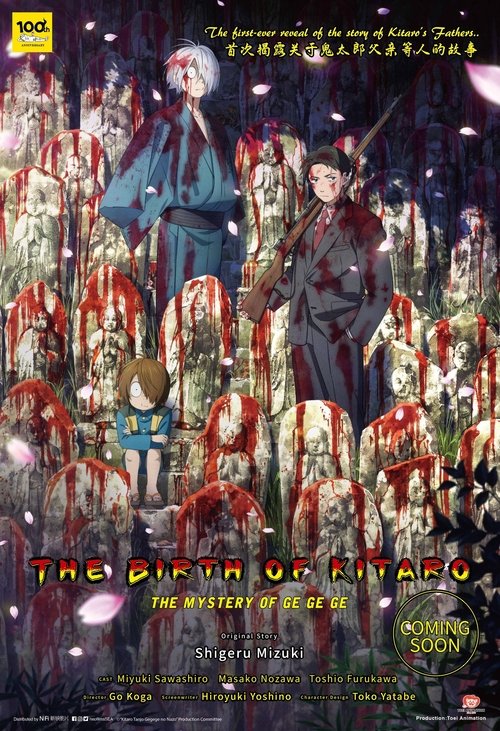
The film uses supernatural folklore to deconstruct post-war Japanese social hierarchies. It moves beyond simple morality tales to explore the friction between underrepresented beings and rigid, corrupt institutional powers. While the historical setting limits racial and gender diversity, the film excels at using non-human entities to critique systemic oppression. The yōkai function as potent metaphors for the 'other' in a highly structured society. Ultimately, the work is a sophisticated critique of authority. It portrays the 'monstrous' as a underrepresented group fighting against predatory, human-led institutions.
Category Breakdown
The film highlights strong emotional connections between male characters, particularly Mizuki and Kitaro’s father. Though there are no explicit labels, the underlying intimacy challenges traditional assumptions about male relationships without falling into stereotypes.
Set in 1955, the film depicts patriarchal structures as sources of violence and instability. Female characters play crucial roles in driving the plot, but their influence is often limited to being catalysts for the mystery, while the stable patriarch cliché is subverted.
The cast reflects the cultural homogeneity of 1955 Japan. Diversity is shown through yōkai, who act as metaphors for social outsiders, highlighting the tension between humans and the 'other.'
The narrative criticizes corrupt, lineage-based power structures through the Ryuga clan. It presents a subjective morality where monsters are often victims of systemic cruelty rather than traditional villains.
Yōkai serve as visual representations of physical or neurodivergent differences. These characters play a significant role in driving the story and drive the plot through their unique abilities, rather than being objects of pity.
Present on Screen
Limited or Absent
Official Synopsis
1955. Kitaro's father, Medama Oyaji, comes to Yagura Village in search of his missing wife. The village was ruled by the Ryuga clan, which controls Japan's political and business circles behind the scenes. Mizuki, who works at a blood bank, visits the village with a secret mission to mourn the death of the head of his family, and meets Kitaro's father. While an ugly fight unfolds over the succession of the head of the family, a member of the family is brutally murdered at the village shrine. It was the beginning of a terrifying chain of events.
1987
1988
1986

1999
2014
2012
1968
1987
No reviews yet. Be the first to share your thoughts on this movie!
Use the rating form above to leave a star rating and optional review.