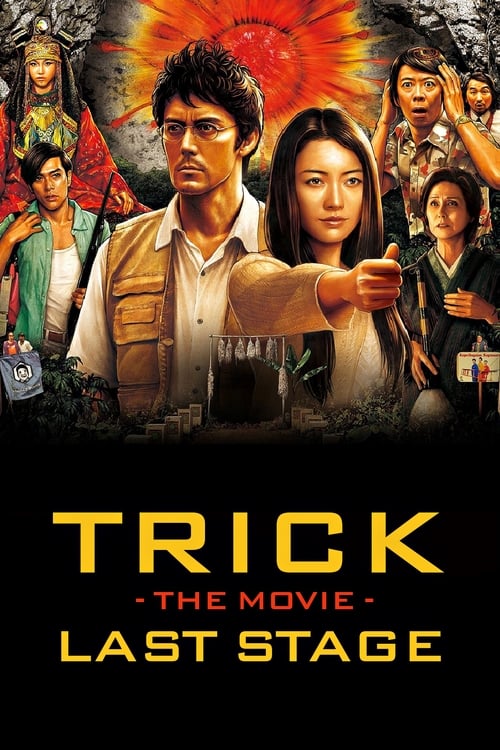
Trick the Movie: Last Stage
2014
No user ratings available yet
Representation score: 5.3 out of 10
Representation Score
Good
2014
Director
Yukihiko Tsutsumi
Runtime
107 minutes
Average Rating
No ratings yetNew Showbiz Analysis
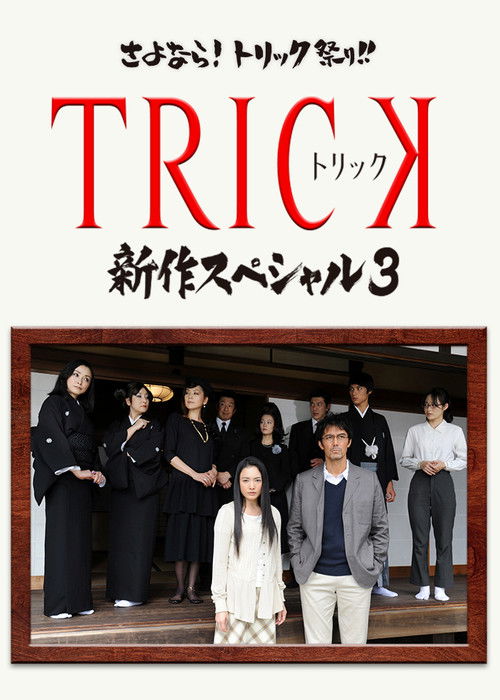
Trick Shinsaku Special 3 succeeds as a deconstruction of the traditional mystery genre. By centering the plot on a power struggle between three sisters, the film challenges traditional gender hierarchies and places women's ability to drive the story at the forefront of the narrative. However, the film's demographic scope is narrow, with an ethnically uniform cast and setting. The lack of explicit LGBTQ+ representation or disability-focused character arcs limits its broader social inclusivity. Ultimately, the film's strength lies in its critique of hereditary power, using paranormal elements to challenge rationalist investigative approaches.
Category Breakdown
The story focuses on the competitive relationship between the Suijin sisters. While it doesn't include explicit LGBTQ+ identities or romance, it avoids reinforcing the idea that everyone is straight or cisgender by highlighting fractured female relationships.
Women play a key role in driving the central conflict through the three Suijin sisters. The male protagonist often acts as a secondary investigator, allowing women to shape the village's socio-political stakes.
The cast and setting are ethnically uniform, reflecting a localized Japanese mountain village. While there is no evidence of whitewashing, the narrative lacks diverse racial representation.
The film critiques traditional lineage by framing the Suijin family dispute as a breakdown of authority. Paranormal elements are used to destabilize rationalist investigative approaches.
There is no prominent depiction of physical or neurodivergent disabilities. The narrative focus remains on psychological tension and the mystery of paranormal occurrences.
Present on Screen
Limited or Absent
Official Synopsis
Within a mountain village, the Suijin family has controlled the village for a long time. The three sisters from the Sujin family begin to quarrel over the family inheritance. There, consecutive murders then take place in the village. The murders can only by explained by paranormal phenomenon. Naoko (Yukie Nakama) and Jiro (Hiroshi Abe) attempt to uncover the truth.
2014
2000
2010
2005
2023
2011
2005
2022
No reviews yet. Be the first to share your thoughts on this movie!
Use the rating form above to leave a star rating and optional review.