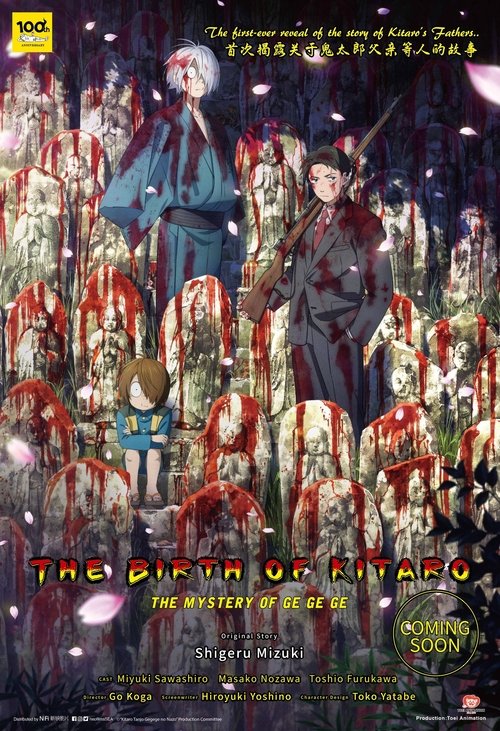
The Birth of Kitaro: The Mystery of GeGeGe
2023
No user ratings available yet
Representation score: 7.3 out of 10
Representation Score
Good
1987
Director
Hiroaki Oogami, Hiroaki Motoigi
Runtime
90 minutes
Average Rating
No ratings yetNew Showbiz Analysis
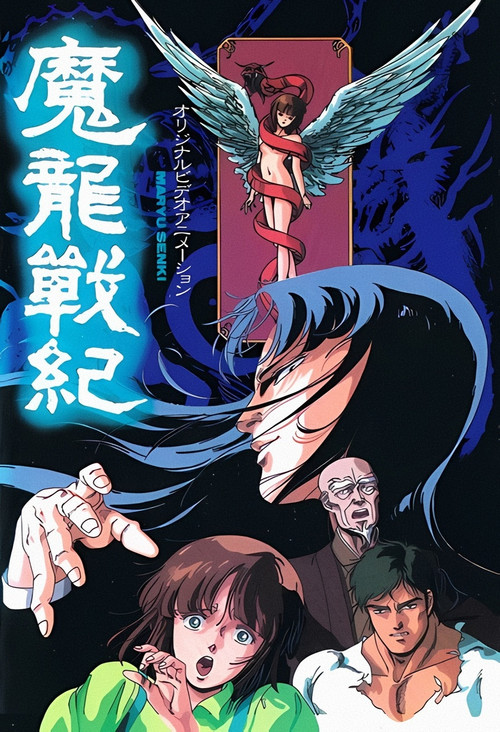
Maryuu Senki functions as a deconstruction of wartime clichés, prioritizing narrative structure over explicit identity representation. It excels in handling gender dynamics and critiquing institutional failures. However, the film remains limited by its era, lacking LGBTQ+ visibility and diverse racial casting. Disability is used more as a plot device than for nuanced character development.
Category Breakdown
The story focuses solely on survival mechanics within a wartime setting. There are no LGBTQ+ characters or non-cisgender identities present in the story.
Female characters transition from passive roles to active combatants and decision-makers. They show significant involvement in driving the story and pass the Bechdel test through discussions about survival tactics.
The cast is mainly composed of East Asian actors, fitting the film's historical and cultural context. It avoids whitewashing but maintains a homogeneous cast.
The film offers a sophisticated critique of institutional stability and the failure of state structures. It emphasizes moral relativism and the corruption of centralized power.
Physical and psychological trauma are used primarily to highlight the brutality of war. There is a lack of actively leading representation for neurodivergence or chronic illness.
Present on Screen
Limited or Absent
Official Synopsis
Once upon a time, there was a certain family having strong influence on the rule of the Imperial Court. They had their own might called “Kidou,” and yet got hated because of the might itself. At last, the patriarch of the family was entrapped to his death, and all the family was doomed to ruin... The present day — the survived descendants of this family, now calling themselves “Kidousyuu,” schemed to resurrect their murdered patriarch once again, and the ferocious evil spell went into action.
2023
1988
1986
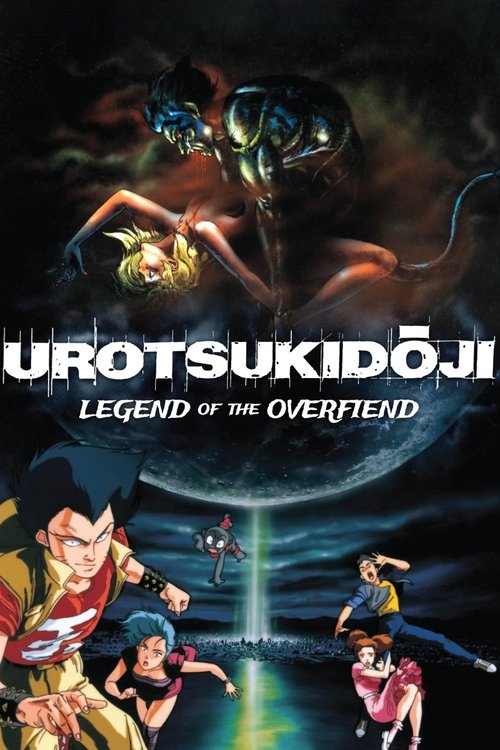
1989

2023
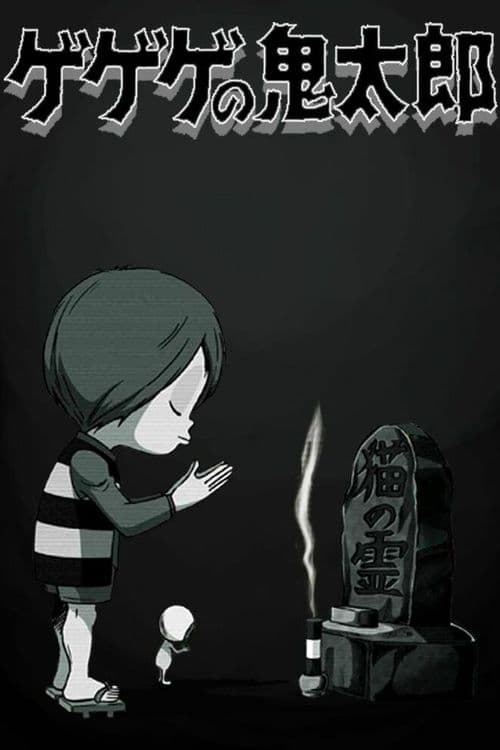
1968
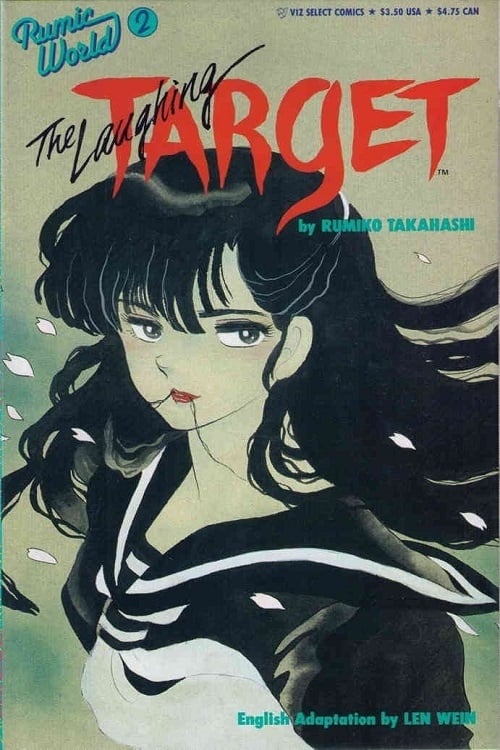
1987
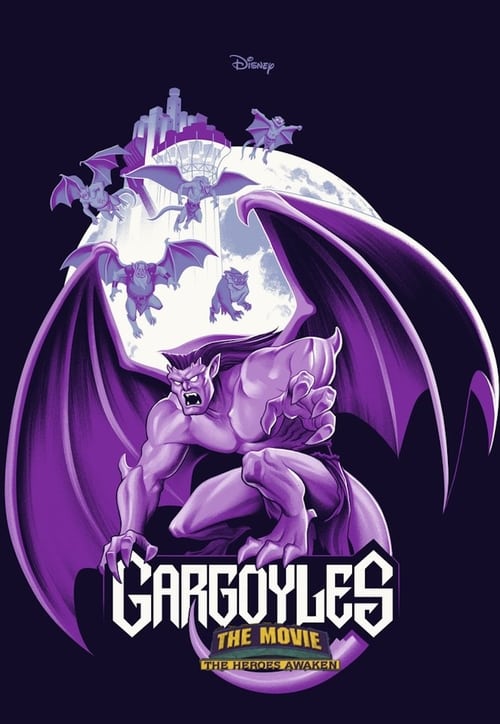
1995
No reviews yet. Be the first to share your thoughts on this movie!
Use the rating form above to leave a star rating and optional review.