
Boys in Brown
1949
No user ratings available yet
Representation score: 0.3 out of 10
Representation Score
Limited
1957
ApprovedDirector
Montgomery Tully
Runtime
83 minutes
Average Rating
No ratings yetNew Showbiz Analysis
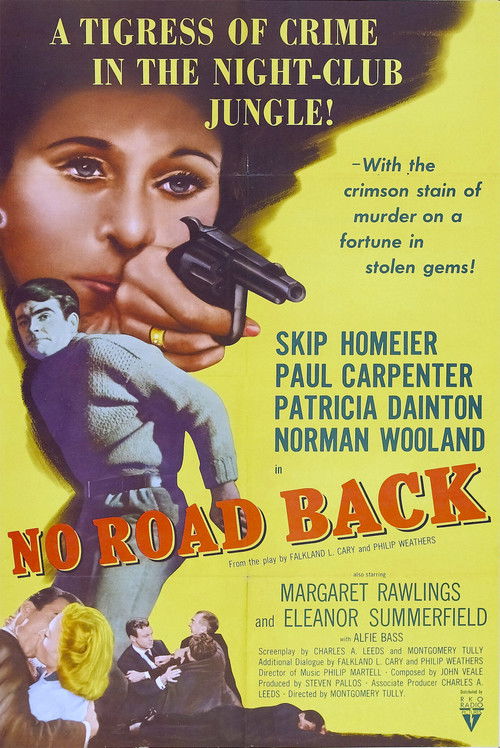
No Road Back is a mid-century crime drama that emphasizes genre conventions over social critique. The narrative centers on the cycle of criminality and individual moral struggles within a traditional British context. While the film highlights characters with significant sensory disabilities, it remains confined to the social norms of its time. The absence of diverse representation and multi-layered complexity limits its scope. Ultimately, the film serves as a realistic portrayal of the underworld and social issues rather than a tool for dismantling systemic hierarchies.
Category Breakdown
The film does not include any characters with non-binary gender identities or same-sex relationships, adhering strictly to the social norms of 1957 British cinema.
The story revolves around male-driven criminal activities and traditional maternal sacrifices. The mother's role is tied to her domestic duties rather than challenging gender hierarchies.
The film reflects the homogeneous society of post-war Britain. It does not feature a multi-ethnic cast, focusing instead on a predominantly white working-class community.
The story explores themes of reoffending and social reintegration. However, it remains a typical crime drama without explicitly critiquing Western institutions.
A central character deals with both blindness and deafness. While this provides visibility, the portrayal risks reinforcing the 'suffering martyr' stereotype.
Present on Screen
Limited or Absent
Official Synopsis
A blind and deaf woman dedicates her life and sacrifices all she has for her son, a good-for-nothing troublemaker who gets mixed up with a criminal gang that tries to frame him for a robbery.
1949

1958

1926

1956

1957

1970

1947
1949
No reviews yet. Be the first to share your thoughts on this movie!
Use the rating form above to leave a star rating and optional review.