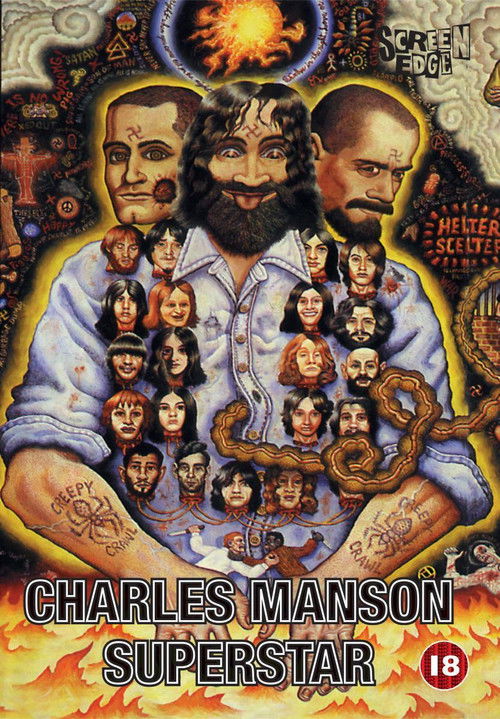
Charles Manson Superstar
1989
No user ratings available yet
Diversity score: 4.7 out of 10
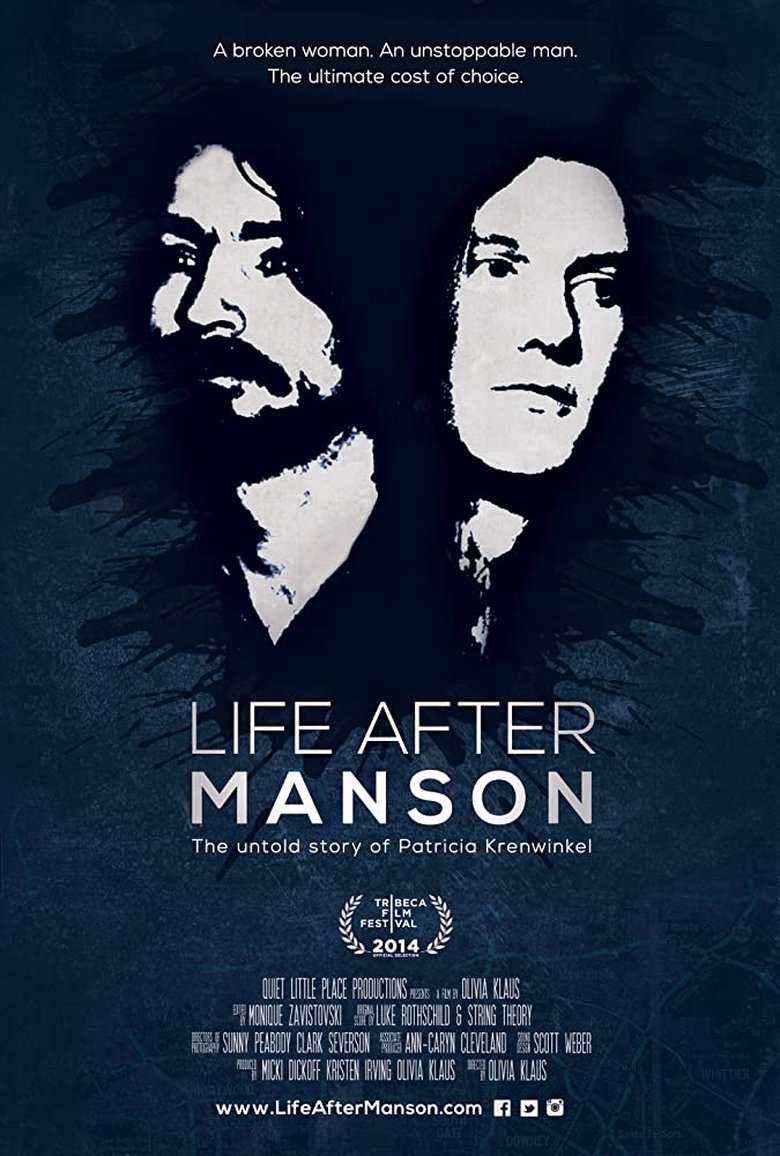
2014
TV-PGDirector
Olivia Klaus
Runtime
25 minutes
Average Rating
No ratings yetSynopsis
Life After Manson is an intimate portrait of one of the world's most infamous crimes and notorious killers. An exclusive interview with Manson Family member Patricia Krenwinkel reveals an unlikely relationship with charismatic Charles Manson that led her to cross every line of moral consciousness, culminating in the brutal murders she committed to win approval of the man she loved. Life After Manson offers a provocative character study that exposes a broken woman struggling with her past, her arduous effort to evaluate the cost of her choices, and the possibility of self-forgiveness. Can society offer her the same, and even identify with a woman who took life only to lose her own in a desperate effort to find love?
Overall Score
Fair
Category Breakdown
LGBTQ+ Representation
The film lacks explicit LGBTQ+ characters or narratives. The focus remains strictly on the romantic and psychological bond between Patricia Krenwinkel and Charles Manson.
Gender Representation
The documentary disrupts traditional hierarchies by centering on a woman's agency in committing violence. It avoids domestic tropes, instead exploring a female subject who actively crossed moral boundaries.
Racial & Ethnic Diversity
The narrative centers on the Manson Family, a group historically lacking racial diversity. The film appears to focus on the interpersonal dynamics of this homogeneous social unit.
Religious & Cultural Diversity
The film prioritizes moral relativism by framing the subject's search for self-forgiveness. It interrogates whether society can offer redemption, challenging the rigidity of traditional institutional judgment.
Disability Representation
The film describes Krenwinkel as a 'broken woman,' but it is unclear if this denotes clinical mental health conditions. There is no explicit confirmation of neurodivergence or disability-specific agency.
Strengths
Areas for Improvement
AI Analysis
Life After Manson is a focused psychological character study that prioritizes individual complexity over broad social representation. Its primary strength lies in subverting gendered expectations of female passivity by portraying a woman capable of extreme, violent agency. However, the film's scope is limited by its subject matter. The historical homogeneity of the Manson Family results in a lack of racial and LGBTQ+ diversity, keeping the overall score in the moderate range. Ultimately, the documentary succeeds as a critique of social and moral hierarchies, even if it lacks a diverse cast of characters.
1989

2025

2009

2011

2017

2015
2013
2013

1975

2017

2019

2010
No reviews yet. Be the first to share your thoughts on this movie!
Use the rating form above to leave a star rating and optional review.