Battle Circus
1953
No user ratings available yet
Diversity score: 2.8 out of 10
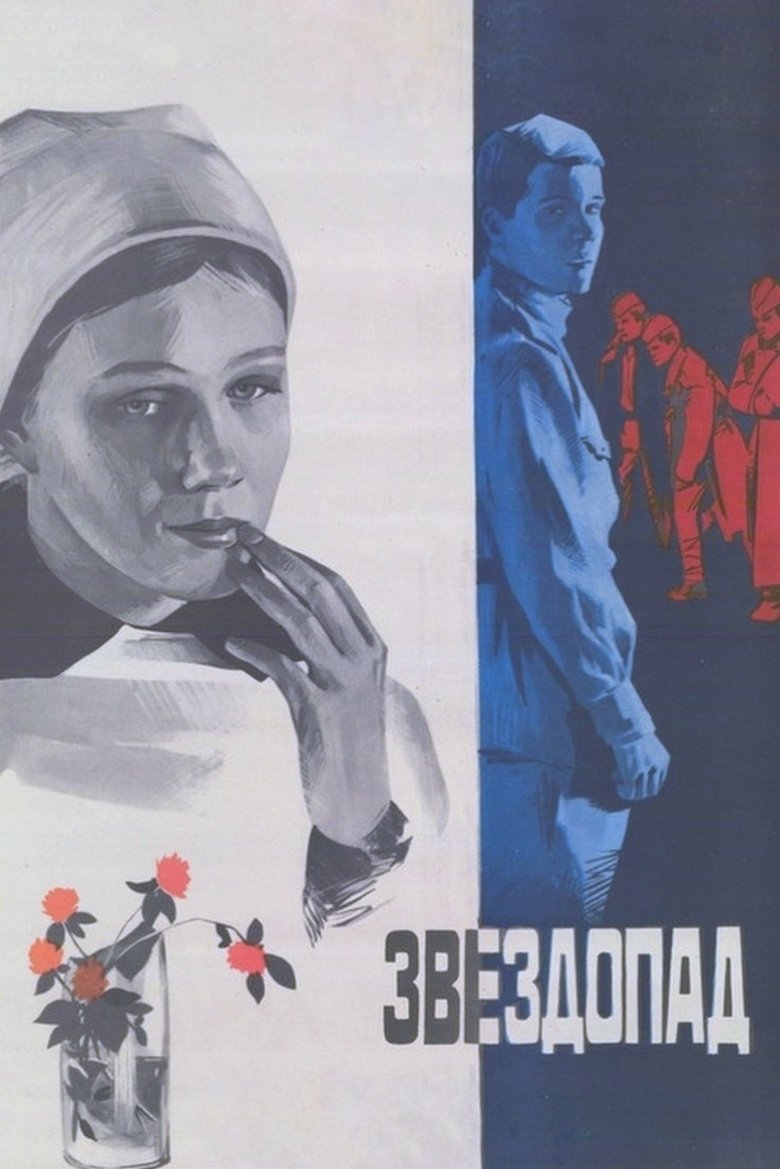
1981
Director
Igor Talankin
Runtime
92 minutes
Average Rating
No ratings yetSynopsis
Falling Star is based on three stories by the contemporary Russian writer Viktor Astafyev and centers on a young soldier on the front lines who is wounded and taken to the hospital. Once there, he muses about his childhood and a little girl he had loved - someone who could easily have grown up to be the nurse that is attending to him now. As he recuperates, he and the nurse fall in love and he very much wants to marry her. At this point, the nurse's mother comes for a visit and advises him against such an action because if they were to marry and he were subsequently killed or maimed in action - the fighting is still close to the hospital - the nurse would suffer much more than if he just left her alone. Now it is up to the soldier to make a decision one way or the other.
Overall Score
Limited
Category Breakdown
LGBTQ+ Representation
The film centers on a traditional heteronormative romantic arc. There is no evidence of non-cisnormative identities or critiques of heteronormativity.
Gender Representation
Female agency is presented through the nurse and her mother. While they offer nuanced perspectives, the roles largely adhere to traditional archetypes of nurturer and matriarch.
Racial & Ethnic Diversity
The cast and setting appear ethnically homogeneous. The narrative does not utilize diverse ethnic casting to disrupt the historical context of the Soviet setting.
Religious & Cultural Diversity
The film explores themes of subjective morality and familial responsibility. It remains rooted in a traditionalist framework regarding the sanctity of human connection.
Disability Representation
The protagonist's status as a wounded soldier introduces themes of physical vulnerability. The injury serves primarily as a vehicle for emotional development and introspection.
Strengths
Areas for Improvement
AI Analysis
Falling Stars is a contemplative humanistic drama that prioritizes existential and interpersonal morality over identity politics. It uses a non-linear structure to contrast the trauma of war with the idealism of childhood. The film's strength lies in its sophisticated look at the emotional complexities of conflict and the sacrifices required by war. It moves beyond simple romance to examine the pragmatic preservation of stability. However, the narrative reinforces conventional social hierarchies and romantic structures. It lacks an intersectional framework, remaining within the traditionalist social and institutional structures of its era.
1953

1949
2001
1957
1942

1959
1965
1959
1937
2015
1929
1993
No reviews yet. Be the first to share your thoughts on this movie!
Use the rating form above to leave a star rating and optional review.