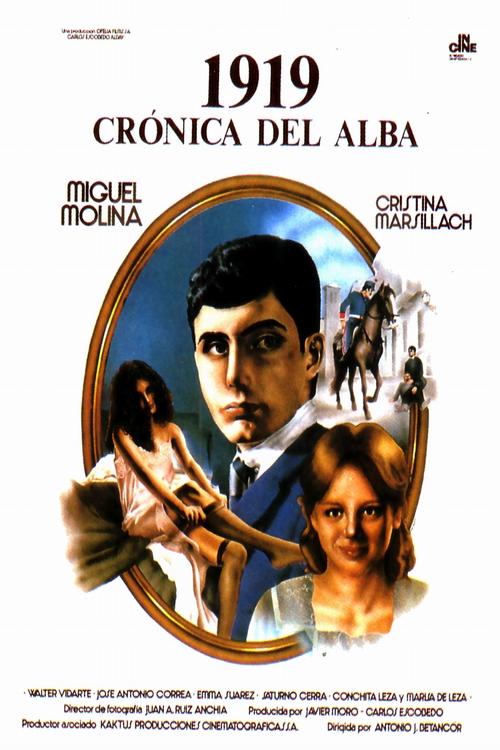
1919, Chronicle of Dawn
1983
No user ratings available yet
Diversity score: 5.8 out of 10
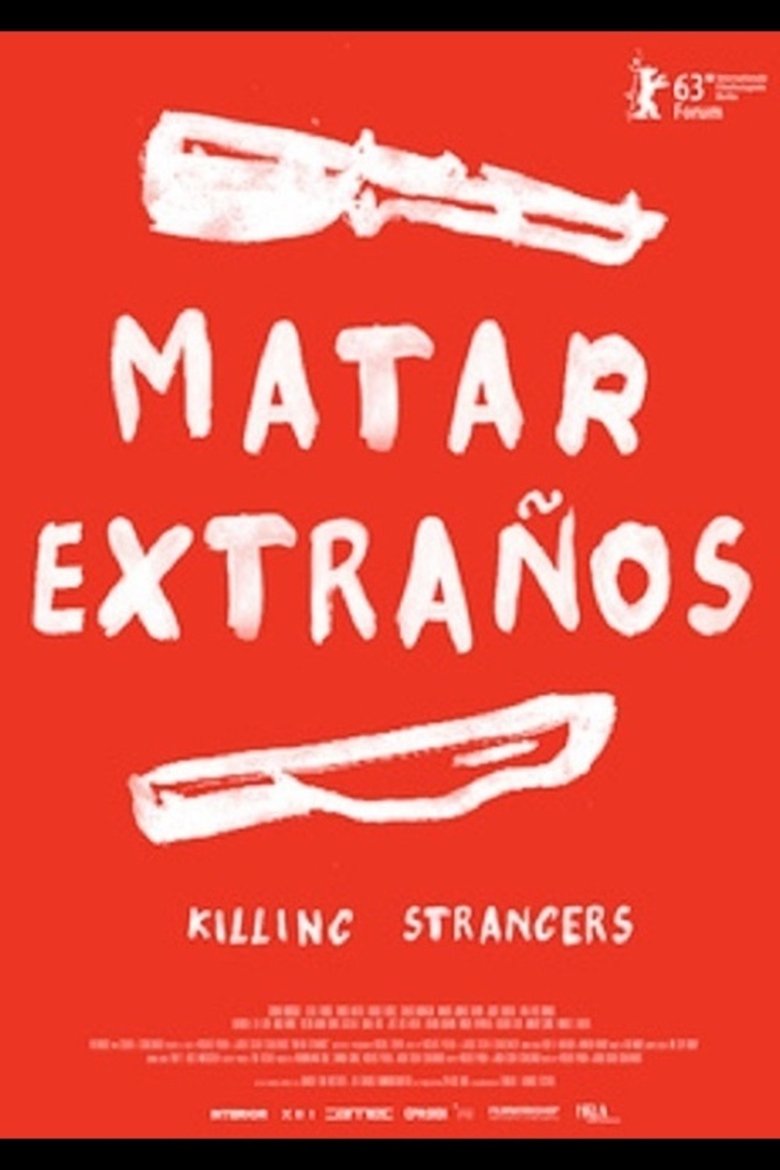
2013
Director
Jacob Secher Schulsinger, Nicolás Pereda
Runtime
63 minutes
Average Rating
No ratings yetSynopsis
A series of auditions is taking place in a museum-like living room. Various men improvise or deliver prepared lines, rehearse gestures and slogans, aim guns, and collapse as if mortally wounded. The theme of revolution is repeatedly invoked. In between, there are scenes of a desert landscape. Three men seeking to join the Mexican Revolution at the beginning of the last century have lost their way. Conflicts smolder among them, water is running low, and mutual mistrust is beginning to take hold. Placing the reenactment of a possible historical event alongside the preparations for it serves to underline the theatricality of every cinematic account of history. Moreover, on a kind of playful meta-meta-level, the scenes in which the actors feel their way through set pieces from a Beatles song or standard battle slogans allow the viewer to witness the simultaneous construction and deconstruction of a collective myth of revolution.
Overall Score
Good
Category Breakdown
LGBTQ+ Representation
The film explores the fluidity of identity through improvisation and performance. While it lacks explicit queer intimacy, its focus on non-normative social roles avoids rigid heteronormative archetypes.
Gender Representation
Masculinity is presented as a theatrical construct rather than an inherent trait. By framing aggressive gestures within a domestic setting, the film deconstructs the traditional authority of the heroic male.
Racial & Ethnic Diversity
The dual-narrative structure uses the Mexican Revolution to explore complex historical agency. It avoids monolithic ethnic portrayals, opting instead for a fragmented and nuanced perspective of historical struggle.
Religious & Cultural Diversity
The work offers a sophisticated critique of institutionalized history and collective myths. It prioritizes a skeptical morality that challenges the power structures used to curate Western historical narratives.
Disability Representation
There is no specific evidence regarding the portrayal of physical or neurodivergent disabilities. The narrative focus remains on performance and improvisation rather than disability.
Strengths
Areas for Improvement
AI Analysis
Killing Strangers is a meta-cinematic inquiry that challenges the stability of historical and social identities. It succeeds by refusing cohesive storytelling, instead using a fragmented approach to deconstruct the myth of the revolutionary hero. The film effectively subverts traditional masculine leadership by placing performances of violence within a domestic, museum-like space. This juxtaposition strips authority from traditional archetypes. While the film excels at intellectual deconstruction and cultural critique, it lacks specific representation regarding disability. The focus remains primarily on the performative nature of gender and history.
1983
1971
2014
2017
1917
1989

2016
2016

2010
2010
2018
1964
No reviews yet. Be the first to share your thoughts on this movie!
Use the rating form above to leave a star rating and optional review.