
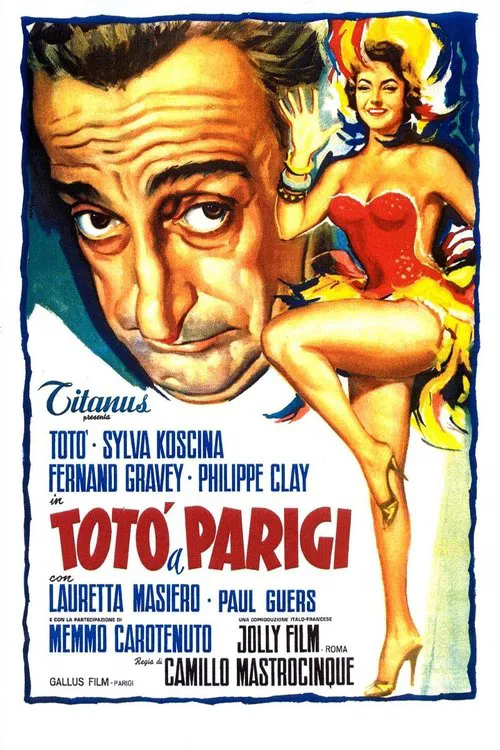
Three Make a Pair
1957
No user ratings available yet
Representation score: 1.6 out of 10
Representation Score
Limited
1958
Director
Camillo Mastrocinque
Runtime
97 minutes
Average Rating
No ratings yetNew Showbiz Analysis
Totò in Paris is a product of its time, functioning as a conventional comedy rooted in slapstick and situational irony. The narrative relies heavily on character doubling and class-based deception to drive its plot. While the film offers a slight critique of social hierarchies through its depiction of corrupt aristocrats, it does so through the lens of farce. It lacks the intentionality needed to disrupt established identity-based hierarchies or provide meaningful representation for underrepresented groups. Ultimately, the film remains centered on a male-dominated conflict, prioritizing traditional comedic clichés over social or systemic deconstruction.
Category Breakdown
The film does not include any characters with non-binary gender identities or sexual orientations. It adheres to the social norms of 1958 and does not challenge the assumption that everyone is straight or cisgender.
Men play the central roles in the film, driving the plot through deception and manipulation. The story reinforces a patriarchal structure where men make decisions and control the narrative.
The cast is predominantly Italian, with settings in Rome and Paris. The story focuses on class differences rather than racial or ethnic diversity.
The story explores class conflict and aristocratic corruption through farce. It uses situational morality to drive comedy rather than providing a systemic critique of institutions.
There are no visible or invisible disabilities mentioned or depicted as central to the character arcs.
Present on Screen
Limited or Absent
Official Synopsis
Duclos's son, a worldly gangster, is compromised in a case of which he is innocent. The proof of this innocence is in the hands of a "competitor", the Marquis de Chemantel de Beauvoiron, a misguided aristocrat. He asked for $ 10 million to cede the document. Duclos will then imagine Chemantel contracting $ 10 million in life insurance for his son. As he discovered in Rome a tramp, a look-alike of the marquis, he will bring this man to Paris and arrange for him to die accidentally.
1957
1980
1962
1973
1956
1977
1959
1975
No reviews yet. Be the first to share your thoughts on this movie!
Use the rating form above to leave a star rating and optional review.