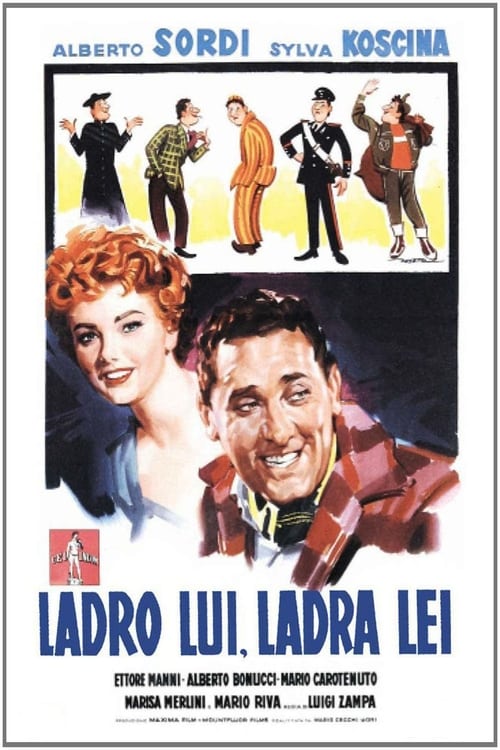
He Thief, She Thief
1958
No user ratings available yet
Representation score: 1.8 out of 10
Representation Score
Limited
1959
Director
Nanni Loy
Runtime
105 minutes
Average Rating
No ratings yetNew Showbiz Analysis
Fiasco in Milan is a period-specific character study that operates within the traditional boundaries of the Italian comedy genre. It emphasizes situational humor and social commentary over systematic narrative deconstruction or progressive representation. The film relies on established clichés, such as the male-led heist gang, which limits its gender diversity. Its cultural depth lies in its moral ambiguity rather than in any intentional disruption of social hierarchies. Overall, the film reflects the demographic and social norms of 1950s European cinema, providing a localized comedic experience rather than a multifaceted one.
Category Breakdown
The film does not include any explicit LGBTQ+ characters or stories. It follows the traditional social structures and heterosexual norms typical of 1959 Italian comedy.
The story centers around a male-dominated gang of robbers. Women appear in supporting roles, but the main characters and drivers of the narrative are male.
The casting reflects the homogeneous demographics of the late 1950s Italian film industry. The characters and settings are localized to Milan and other Italian regions.
The heist premise slightly deviates from strict Christian morality by focusing on the flawed motivations of the working class. However, it uses capitalism as a backdrop without challenging social norms.
There are no characters with visible or invisible disabilities in the film's narrative.
Present on Screen
Limited or Absent
Official Synopsis
The usual gang of robbers are hired by a thief from Milan to steal a suitcase full of money, but troubles will hinder the success of the operation.
1958

1958
1959

1972
1967
1972
1966
1960
No reviews yet. Be the first to share your thoughts on this movie!
Use the rating form above to leave a star rating and optional review.