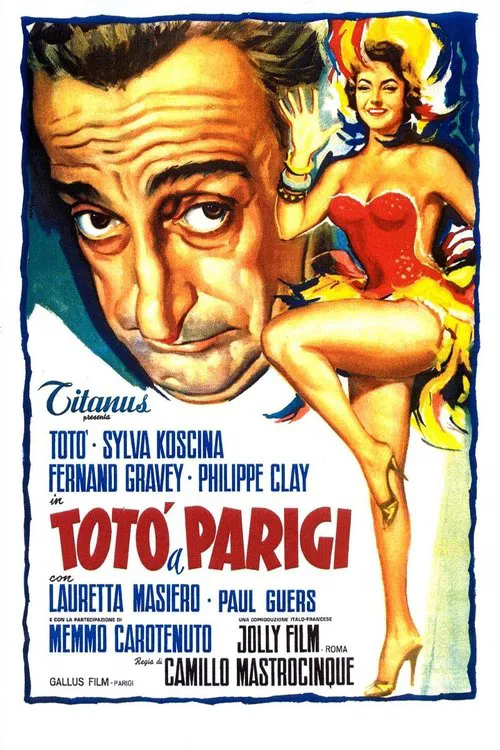
Toto in Paris
1958
No user ratings available yet
Representation score: 2.3 out of 10
Representation Score
Limited
1956
Director
Camillo Mastrocinque
Runtime
92 minutes
Average Rating
No ratings yetNew Showbiz Analysis
This film is a typical product of its time, emphasizing traditional comedic archetypes over diverse representation. It captures a specific moment in Italian history marked by the influence of mass media. The storytelling focuses on class conflicts and the absurdity of sudden wealth, but this focus limits the portrayal of diverse identities. The film serves as a social snapshot, offering insights into post-war consumerism but not challenging the era's gender, race, or sexual orientation hierarchies.
Category Breakdown
The film follows the social norms of 1950s Italy and does not include any non-binary gender identities or queer stories. It focuses on traditional heterosexual relationships.
The story centers around the male experience and the 'trickster' character type. Women play traditional roles, while the plot is driven by men's pursuit of wealth.
The cast is mostly made up of actors from similar backgrounds, reflecting the local context of mid-century Italy. There is no indication of intentional ethnic diversity in the story.
The film examines the conflict between old aristocratic traditions and new media-driven capitalism. It uses humor and chaos to explore the shift towards a consumerist society.
The humor in the film comes from situational farce and slapstick comedy rather than physical impairments. Characters with disabilities are not central to the plot.
Present on Screen
Limited or Absent
Official Synopsis
The penniless Duke decides to participate in "Lascia o raddoppia", a TV quiz show, in order to win five million lira. Then two gangsters bet between themselves on his success and, alas, the Duke is kidnapped.
1958
1976
1959

2015
1960
1967
1958
1962
No reviews yet. Be the first to share your thoughts on this movie!
Use the rating form above to leave a star rating and optional review.