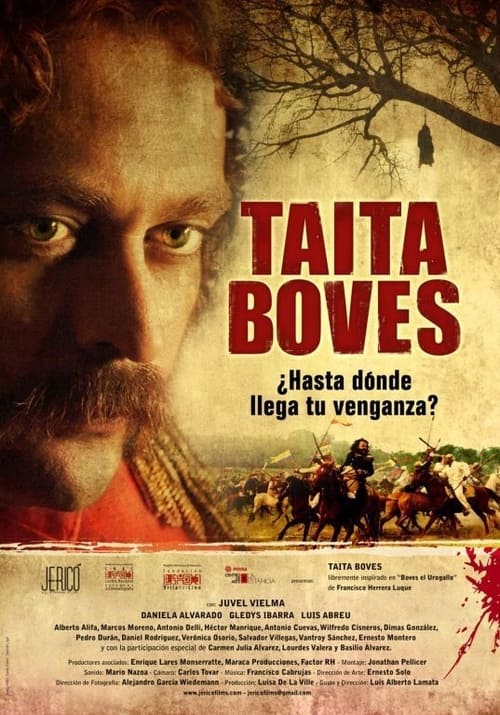
Taita Boves
2010
No user ratings available yet
Representation score: 5.2 out of 10

Representation Score
Fair
2006
Director
Diego Rísquez
Average Rating
No ratings yetNew Showbiz Analysis
Francisco de Miranda serves as a character who actively challenges colonial stability. The film successfully centers a post-colonial narrative, moving the focus away from Eurocentric historical clichés toward the ability to act of Latin American movements. The protagonist's navigation between princes and asylums suggests a nuanced exploration of moral relativism. This approach disrupts established class and state structures through a lens of systemic disruption. While the film provides strong themes around imperial oppression, specific details regarding gendered ability to act and LGBTQ+ identities remain largely implied through lifestyle rather than explicit representation.
Category Breakdown
The protagonist's involvement in brothels and his status as a conqueror of nobles suggests a flexible approach to social hierarchy. However, there is no clear indication of non-straight or non-cisgender identities.
Miranda's role as a globetrotter and disruptor of social orders highlights his ability to act. However, the specific roles and ability to act of female characters are not clearly defined.
The film centers on a Venezuelan revolutionary, shifting the historical focus away from Western imperial centers to highlight Latin American ability to act.
The story focuses on the systemic disruption of state authority and portrays Western institutional power as something to be overthrown, aligning with anti-imperialist perspectives.
There is no information available regarding the depiction of physical or neurodivergent disabilities in this film.
Present on Screen
Limited or Absent
Official Synopsis
In 1750, in the glare of the Caribbean, the man who created history known as the forerunner of independence in Venezuela. His name is Francisco de Miranda and, to be exact, is the largest globetrotter who has known the Americas, Miranda has a reputation as an inveterate wanderer, an eternal conspirator, a turncoat, a conqueror of nobles and courtiers, a lover of asylums, libraries, prisons and brothels, has written 63 volumes of his autobiography, a friend of princes, military and world-renowned artists, collector of women and unthinkable dreams, restless fugitive, owner of ten different names, and presented by the British press the moment as the future liberator of Spanish America.
2010

2013

1969

2022
1948

2010

2019

2000
No reviews yet. Be the first to share your thoughts on this movie!
Use the rating form above to leave a star rating and optional review.