I Take These Truths
1995
No user ratings available yet
Representation score: 0.0 out of 10
Representation Score
Minimal
1993
Director
Stan Brakhage
Runtime
2 minutes
Average Rating
No ratings yetNew Showbiz Analysis
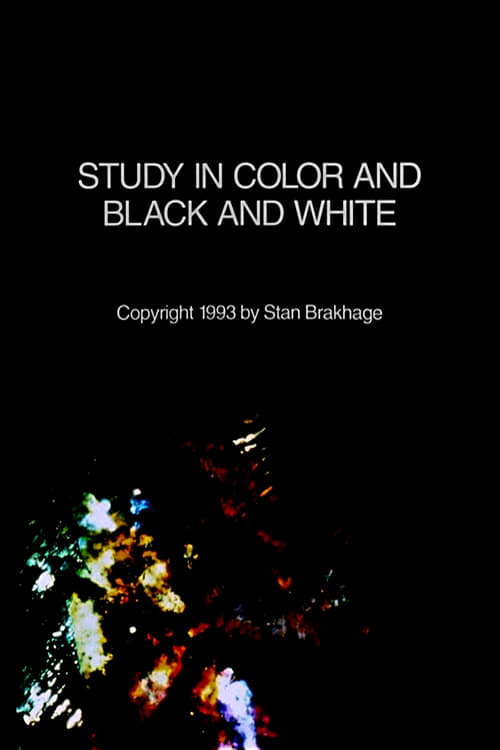
Stan Brakhage’s *Study in Color and Black and White* is a formalist, non-narrative exploration of visual perception. By using hand-painted textures and photographic step-printing, the film focuses on the materiality of the medium rather than human subjects. Since the work is purely abstract, it avoids traditional cinematic structures like character arcs or dialogue. It does not engage with identity-based representation or social hierarchies, as there is no human ability to act present. The film's disruption of reality is purely sensory. It seeks to deconstruct the act of seeing through light and movement rather than addressing sociopolitical themes or overlapping aspects of identity.
Category Breakdown
The film contains no characters, gendered identities, or interpersonal dynamics related to LGBTQ+ individuals.
The narrative structure does not include any depictions of gendered roles or social interactions.
The work uses light, color, and texture instead of human subjects. It does not employ casting or characterization.
The film does not address religious, political, or socioeconomic institutions. It lacks the capacity to critique specific cultural frameworks.
There are no characters depicted within the film. Consequently, there is no engagement with neurodivergence or physical disability.
Present on Screen
Limited or Absent
Official Synopsis
A hand-painted and photographically step-printed film, which exhibits variably shaped small areas of color (in a dark field) that explode into full frames of textured color interwoven with white scratch patterns that create a sense of interior depth and three-dimensional movement.
1995

1999

1999
1971
1960
1981
1966
1964
No reviews yet. Be the first to share your thoughts on this movie!
Use the rating form above to leave a star rating and optional review.