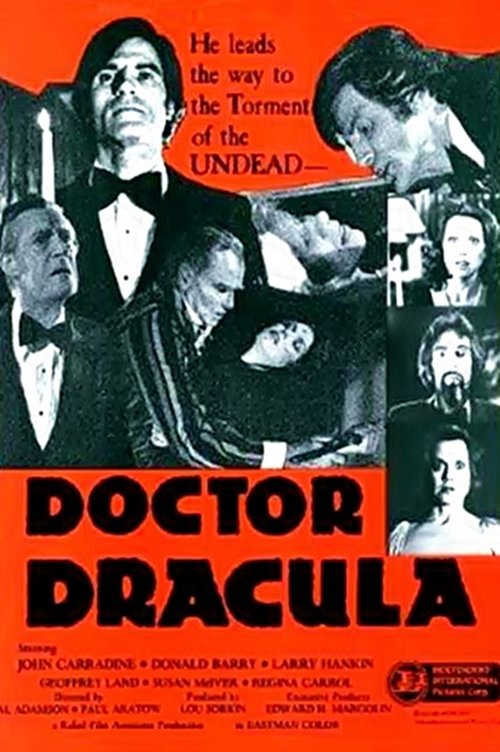
Doctor Dracula
1978
No user ratings available yet
Representation score: 1.3 out of 10

Representation Score
Limited
1957
ApprovedDirector
Herbert L. Strock
Runtime
69 minutes
Average Rating
No ratings yetNew Showbiz Analysis
Blood of Dracula is a quintessential product of mid-century B-movie production. It relies heavily on established genre clichés, such as the 'mad teacher' and the 'supernatural intruder,' to drive its narrative. These elements serve to reinforce, rather than challenge, the social norms of the 1950s. The film lacks intentionality regarding diverse representation. Instead, it prioritizes traditional moral and demographic structures, framing any deviation from the status quo as a threat that must be neutralized. Ultimately, the work functions as a standard example of period-specific horror that maintains a rigid, conventional framework of identity and authority.
Category Breakdown
The film adheres to the straight-centered constraints of 1950s horror. It lacks any representation of non-straight relationships or non-cisgender identities.
A female teacher serves as the central antagonist, but her role is framed through supernatural madness. This reinforces a cliché where female authority is depicted as inherently unstable.
The casting reflects the homogeneous demographic norms of the era. There is no evidence of diverse casting or non-white protagonists to disrupt social hierarchies.
The story relies on a Western moral binary between rational stability and foreign occult threats. The Carpathian medallion acts as a disruptive force against Western institutional norms.
Mental instability is used as a primary plot device for horror. The film utilizes psychological volatility as shorthand for villainy rather than providing nuanced portrayals of lived experience.
Present on Screen
Limited or Absent
Official Synopsis
A crazed teacher at a respectable girls' school draws power from a medallion she has obtained from the Carpathian Mountains, and uses it to experiment telepathically on the school's newest young pupil.
1978
1971
1986
1960
1982
1931
1971
1960
No reviews yet. Be the first to share your thoughts on this movie!
Use the rating form above to leave a star rating and optional review.