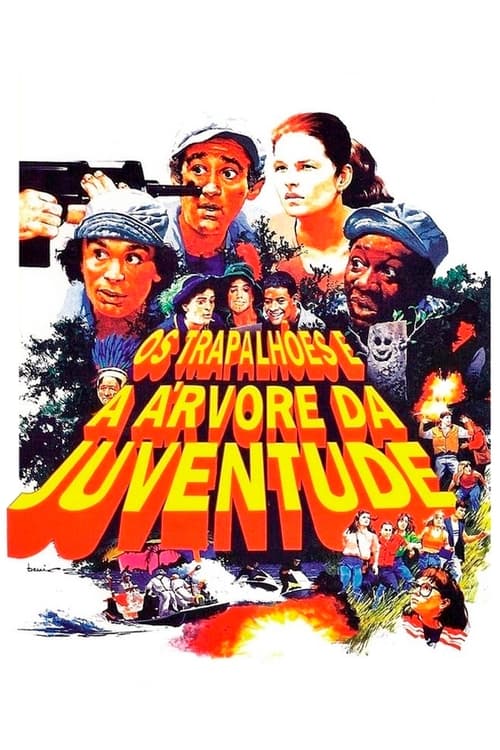
Os Trapalhões e a Árvore da Juventude
1991
No user ratings available yet
Representation score: 2.0 out of 10

Representation Score
Fair
1983
Director
Del Rangel
Runtime
91 minutes
Average Rating
No ratings yetNew Showbiz Analysis
The film offers moderate inclusion by focusing on ecological ability to act rather than deep multi-layered complexity. By setting the narrative in the Pantanal, it moves away from Western-centric adventure clichés and engages with local Brazilian identity. While the ensemble casting provides a meaningful departure from homogeneous structures, the film does not explicitly challenge social hierarchies. It relies on traditional comedic archetypes that do not push boundaries regarding gender or queer identity. Ultimately, the work uses a mythological framework to promote environmentalism, though it remains within the bounds of conventional family entertainment.
Category Breakdown
The film does not include explicit LGBTQ+ characters or stories about non-straight relationships. It follows traditional comedic structures focused on heterosexual social interactions.
Carla, a photographer, is a professional woman in the story. However, her role stays within a traditional adventure setup without challenging gender hierarchies.
Set in the Pantanal, the film features a diverse cast that challenges mainstream uniformity. The narrative highlights the geography of the Global South rather than Western landscapes.
The film uses the Noah's Ark myth to promote a secular environmental message. Noé, the mystic, drives ecological action rather than religious teaching.
There is no visible or invisible disability featured in the main character arcs or plot progression.
Present on Screen
Limited or Absent
Official Synopsis
Duda is a zoo cleaner. He and his friend Kiko and Zeca are actively engaged in an animal protection group. For this reason, they are summoned by mystic Noé to fight animal hunters in the Pantanal region, in Brazil, who are after animal skins and furs, and are led by the mean Morel. They accept the mission and, on their way, meet archaeologist Marcos and photographer Carla, who are in search of a lost pyramid built by the Phoenician. Together, they try to beat the hunters.
1991

1997

1988

1979
1989
1988

1980
1990
No reviews yet. Be the first to share your thoughts on this movie!
Use the rating form above to leave a star rating and optional review.