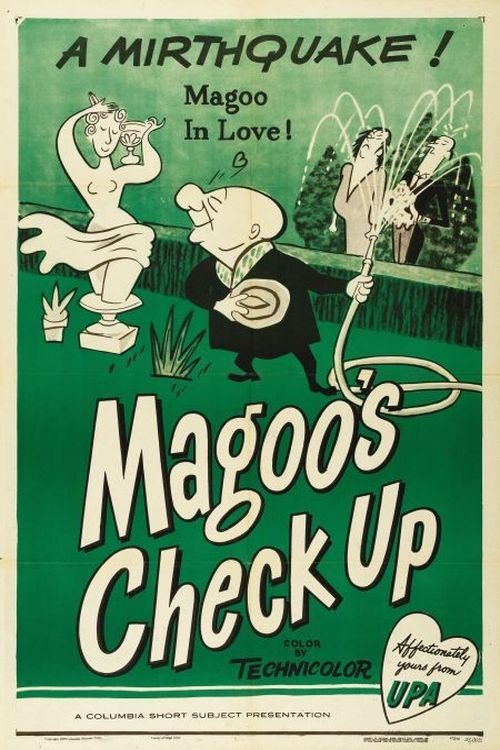
Magoo's Check Up
1955
No user ratings available yet
Representation score: 1.7 out of 10
Representation Score
Limited
1958
ApprovedDirector
Pete Burness
Runtime
7 minutes
Average Rating
No ratings yetNew Showbiz Analysis
This 1958 animation reflects its era, emphasizing established social hierarchies and traditional comedic elements. The plot centers around a male protagonist pursuing a Broadway star, reinforcing mid-century gender roles and heterosexual relationships. The film presents a narrow, Anglo-centric view of the past, focusing on historical nostalgia. It lacks meaningful representation of diverse racial or cultural identities. Mr. Magoo's visual impairment drives slapstick humor, treating disability as a comedic device rather than a nuanced character trait.
Category Breakdown
The film focuses on heterosexual relationships and does not include any LGBTQ+ identities or narratives involving non-binary gender experiences.
The movie adheres to traditional 1950s gender roles. The female character mainly serves as a romantic goal or a trigger for the protagonist’s comedic mishaps.
The setting portrays a homogeneous, Anglo-centric view of the 1890s. There is no indication of diverse casting or ethnic representation in this historical film.
The story emphasizes nostalgia for Western entertainment traditions. It upholds conventional social structures without offering any critical cultural commentary.
Mr. Magoo's visual impairment is used primarily for comedic effect. His blindness leads to slapstick misunderstandings rather than exploring his lived experience.
Present on Screen
Limited or Absent
Official Synopsis
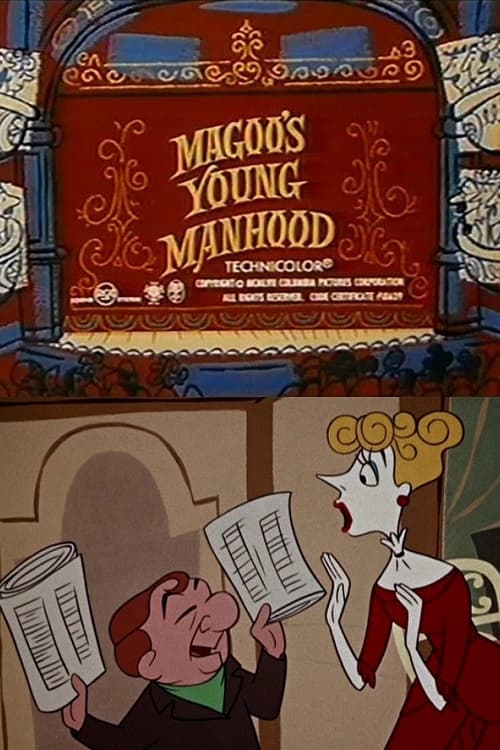
In a flashback Mr. Magoo thinks back in time to the Gay 90's when he was a young man, and just as myopic then as in the 1950s. He makes a bet with a friend that he can get a date with a star of the Broadway stage. It isn't long before Stage-Door Johnny Magoo winds up on stage in the play during a dinner scene, and performs rather well considering he was hearing the dialogue for the first time. Later, he is firmly convinced he had taken the Police Gazette beauty to dinner. No, her name wasn't Andre.
1955
1957
1957
1956
1957
1954

1953
1959
No reviews yet. Be the first to share your thoughts on this movie!
Use the rating form above to leave a star rating and optional review.