
Magoo's Masterpiece
1953
No user ratings available yet
Diversity score: 2.8 out of 10
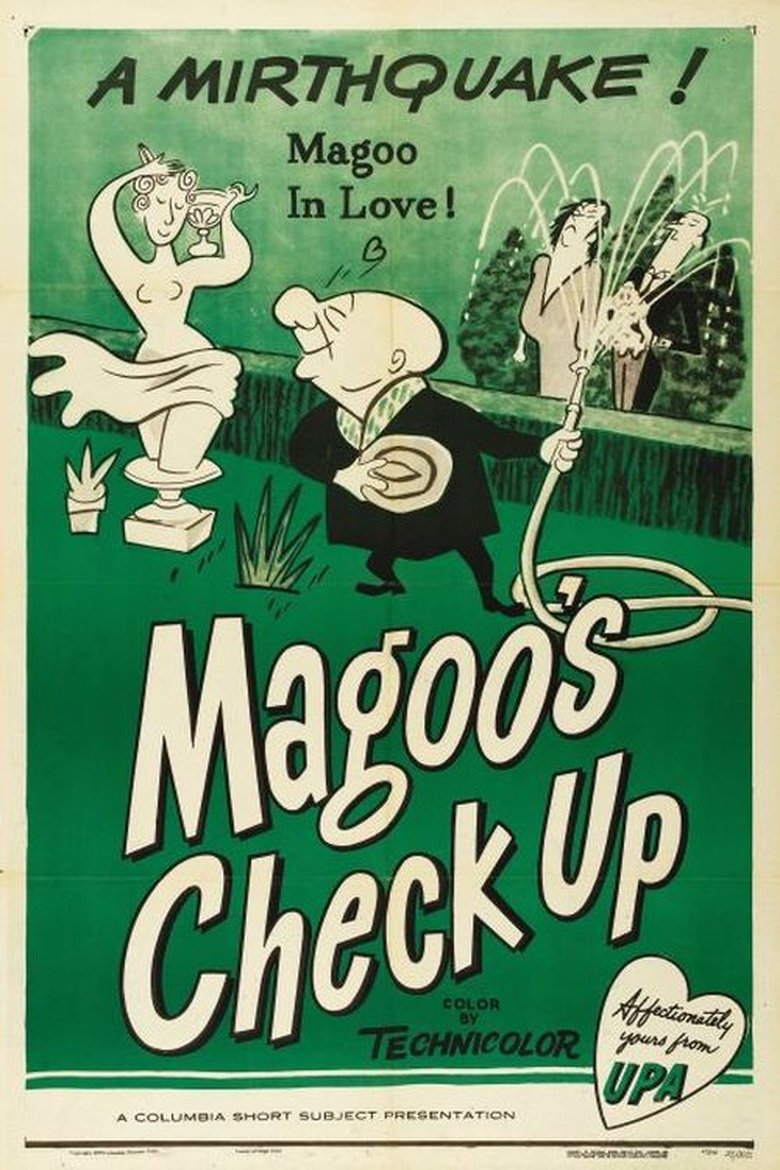
1955
ApprovedDirector
Pete Burness
Runtime
6 minutes
Average Rating
No ratings yetSynopsis
After a rather unpleasant incident followed by a suggestion that Magoo have his glasses checked, Magoo decides to have his eyes examined. He mistakes a television repair shop for an ophthalmologist/optometrist and the fun begins.
Overall Score
Minimal
Category Breakdown
LGBTQ+ Representation
The film contains no LGBTQ+ characters or narratives. The story focuses entirely on a single protagonist navigating a comedic misunderstanding.
Gender Representation
The narrative centers on a male protagonist whose sensory impairment drives the plot. It lacks female characters with agency, adhering to a traditional male-led comedic framework.
Racial & Ethnic Diversity
The production reflects the era's homogeneous casting standards. There is no indication of a diverse cast or characters from varied ethnic backgrounds.
Religious & Cultural Diversity
The film utilizes a standard Western social setting to facilitate slapstick humor. It does not challenge Western institutions or offer systemic critique.
Disability Representation
Visual impairment serves as the central comedic engine. The depiction uses disability as a device for situational humor rather than a nuanced portrayal of lived experience.
Strengths
Areas for Improvement
AI Analysis
Magoo's Check Up is a quintessential product of 1950s animation, prioritizing slapstick and situational irony over social commentary. The film relies on a singular, homogeneous perspective that reflects the era's conventional storytelling tropes. The narrative lacks intersectional depth, focusing almost exclusively on the protagonist's sensory errors. This approach results in a narrow scope that fails to engage with diverse identities or challenge established social hierarchies. Ultimately, the film functions as a traditional comedic short. It uses mid-century American settings and character archetypes to drive humor without addressing broader cultural or social complexities.
1953
1955
1956
1956
1956
1958
1957
1957
1958
1957
1957
1952
No reviews yet. Be the first to share your thoughts on this movie!
Use the rating form above to leave a star rating and optional review.