
A Son Comes Home
1936
No user ratings available yet
Representation score: 1.4 out of 10
Representation Score
Minimal
1930
PassedDirector
Allan Dwan
Runtime
68 minutes
Average Rating
No ratings yetNew Showbiz Analysis
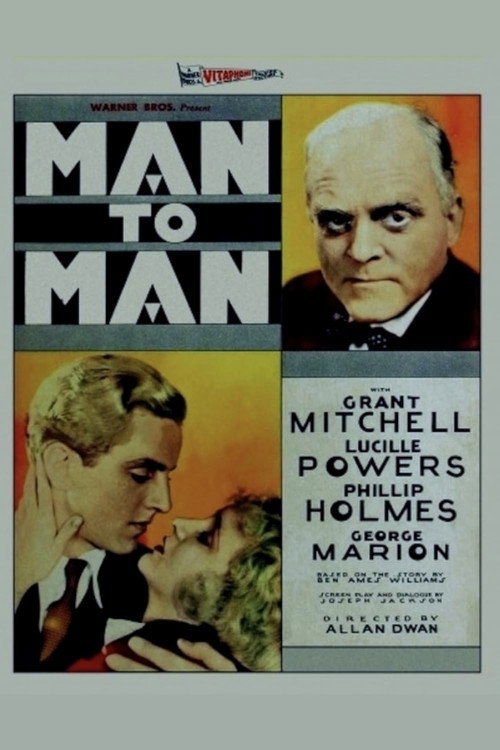
Man to Man is a typical crime drama that reflects the social and demographic norms of early Hollywood. The film relies on conventional clichés of masculinity and individualist justice, offering no disruption to the established status quo of the period. The narrative structure centers on a male-driven pursuit of justice, reinforcing traditional gender hierarchies. This focus on individual ability to act and social standing comes at the expense of broader systemic or cultural exploration. Ultimately, the film lacks the complexity needed to challenge existing hierarchies. It functions as a product of its time, adhering to the homogeneous casting and narrow social perspectives typical of 1930s studio cinema.
Category Breakdown
The film does not include any characters with non-binary or LGBTQ+ identities, nor does it depict any same-sex intimacy. It follows the assumption that everyone is straight and cisgender, typical of early 1930s studio productions.
The story centers on the male protagonist, who drives the narrative through physical confrontations and personal justice. Female characters play conventional supporting roles that reinforce traditional gender hierarchies.
The cast is uniform, reflecting the standard casting practices of the era. There are no non-white leads or characters representing diverse racial backgrounds.
The story emphasizes individual honor and personal redemption within a traditional Western moral framework. It focuses on individual ability to act rather than critiquing systemic issues.
The film does not feature any characters with visible or invisible disabilities. Disability is not used as a narrative device or plot point.
Present on Screen
Limited or Absent
Official Synopsis
A young man attempts to overcome the memory of his father, who was sent to jail for committing a murder.
1936

1939
1936
1939
1929
1932
1941

1931
No reviews yet. Be the first to share your thoughts on this movie!
Use the rating form above to leave a star rating and optional review.