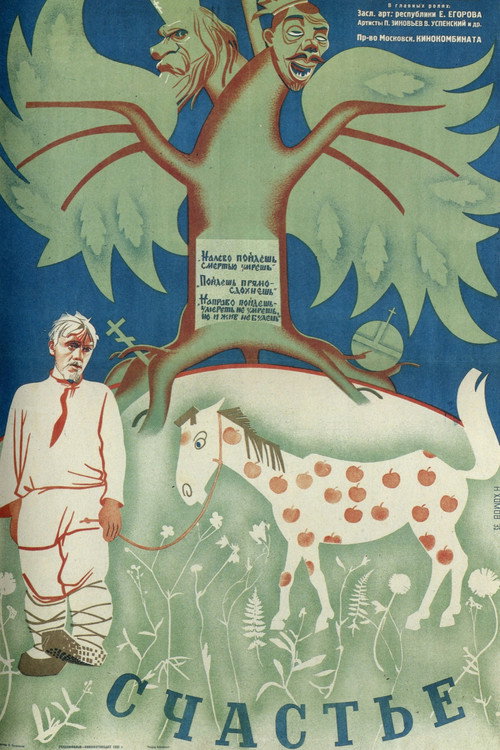
Happy-Go-Lucky
1972
No user ratings available yet
Representation score: 2.6 out of 10
Representation Score
Fair
1935
Director
Aleksandr Medvedkin
Runtime
63 minutes
Average Rating
No ratings yetNew Showbiz Analysis
The film serves as a historical document of ideological transition, emphasizing the collective over the individual. Its strength lies in its critique of traditional religious and capitalist structures, replacing them with a secular, state-centric social framework. However, the film lacks modern multi-layered markers, such as representation for LGBTQ+ identities or neurodivergent and physically disabled characters.
Category Breakdown
The film focuses solely on straight relationships and does not depict any LGBTQ+ identities or same-sex intimacy.
Women are shown as active participants in the collective workforce, challenging traditional gender roles and emphasizing labor-based equality.
Casting reflects a predominantly Slavic demographic, focusing on peasant identity without broader racial or ethnic variety.
The film aggressively criticizes religious authority and individual ownership, prioritizing a secular, collective ideology over traditional religious and capitalist structures.
The film does not engage significantly with disability as a source of empowerment. Instead, the protagonist's limitations are used primarily for comedic effect.
Present on Screen
Limited or Absent
Official Synopsis
A hapless loser (with the surname of Loser) undergoes misadventures with avaracious clergy, a tired horse, and a walking granary (among other things) on his road to collectivized happiness.
1972
1938
1937

1930
1928
1970
1940
1990
No reviews yet. Be the first to share your thoughts on this movie!
Use the rating form above to leave a star rating and optional review.