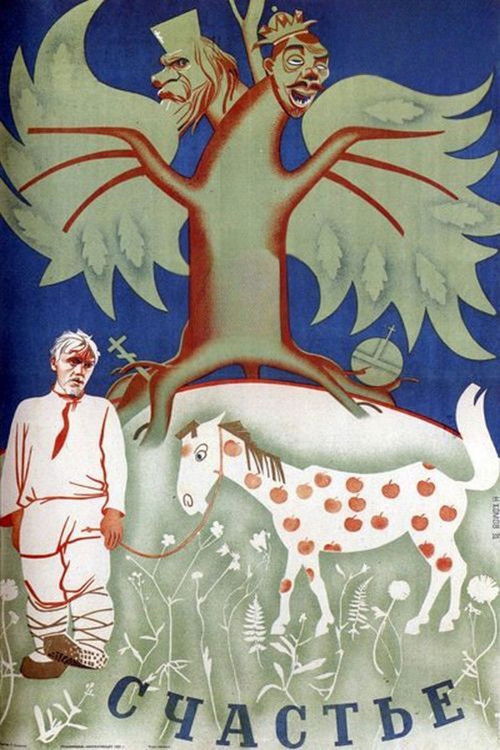
Happiness
1935
No user ratings available yet
Diversity score: 5.1 out of 10

1940
Director
Grigori Aleksandrov
Runtime
96 minutes
Average Rating
No ratings yetSynopsis
Tanya Morozova, an illiterate but industrious textile factory worker, finds happiness through her education and the Stakhanovite movement. She becomes a shock labourer and ascends through the Party ranks, ultimately being elected as a member of the Supreme Soviet.
Overall Score
Fair
Category Breakdown
LGBTQ+ Representation
The film focuses entirely on the protagonist's integration into industrial and political collectives. It lacks any depiction of non-heteronormative identities or same-sex intimacy.
Gender Representation
Tanya Morozova's journey from manual laborer to Supreme Soviet member subverts traditional submissive female tropes. The narrative centers her intellectual and political agency within the factory and assembly.
Racial & Ethnic Diversity
The film emphasizes a unified proletarian identity rather than ethnic pluralism. The cast reflects the demographic homogeneity typical of Soviet-era cinematic focuses on the industrial working class.
Religious & Cultural Diversity
The story prioritizes collective progress over individual wealth, deconstructing bourgeois values. It frames social fulfillment through institutional loyalty and the dismantling of old-world hierarchies.
Disability Representation
Characters are portrayed as able-bodied laborers to emphasize physical industriousness. There is no discernible representation of physical or neurodivergent disabilities.
Strengths
Areas for Improvement
AI Analysis
The film excels at subverting traditional gender roles by placing a female protagonist at the center of industrial and political progress. Tanya Morozova's ascent provides a rare depiction of female agency in a leadership capacity. However, the work is highly limited by its era's focus on homogeneity. It lacks any representation of LGBTQ+ identities or physical disabilities, adhering strictly to a vision of able-bodied, heteronormative labor. While it scores high for its cultural critique of bourgeois structures, its narrow focus on class-based unity results in a lack of racial and ethnic pluralism.
1935
1928

1938
1937
1941
1968

1981

2004

1991

1999

1953

1975
No reviews yet. Be the first to share your thoughts on this movie!
Use the rating form above to leave a star rating and optional review.