Jakko
1941
No user ratings available yet
Representation score: 1.2 out of 10
Representation Score
Minimal
1944
ApprovedDirector
Leslie Fenton
Runtime
86 minutes
Average Rating
No ratings yetNew Showbiz Analysis
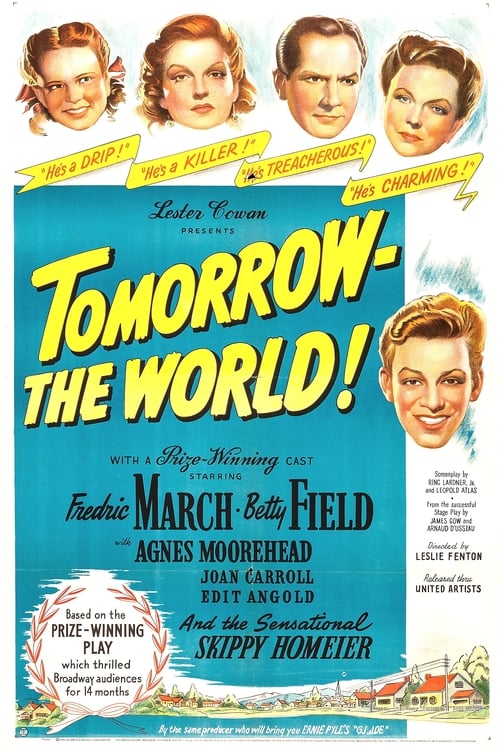
Tomorrow, the World! is a product of 1940s wartime didacticism, emphasizing the reinforcement of democratic stability over exploring diverse identities. The film centers on the political and personal struggles of a former Hitler Youth member reclaiming his ability to act. While the film provides a nuanced perspective on the psychological impact of political indoctrination, it does so through a lens that upholds traditional social structures. The narrative is crafted to defend Western institutions rather than critique them, leading to a lack of contemporary progressive representation.
Category Breakdown
The film does not depict any non-straight relationships or same-sex intimacy, sticking closely to the social norms of the mid-1940s.
Women are shown as active participants in the resistance movement, indicating some ability to act. However, the narrative emphasizes traditional gender roles and wartime duties.
The cast is predominantly white, reflecting the ethnic homogeneity of the time. Diverse casting is not utilized to challenge the period's visual norms.
The story serves as wartime propaganda to promote Western democratic ideals. It portrays the fight against fascism as a moral duty to restore democratic order.
There are no prominent depictions of physical or neurodivergent disabilities used as central plot devices or character drivers.
Present on Screen
Limited or Absent
Official Synopsis
German boy Emil comes to live with his American uncle who tries to teach the former Hitler Youth to reject Nazism.
1941
1948

1950
1990
1943
2002
1959
2020
No reviews yet. Be the first to share your thoughts on this movie!
Use the rating form above to leave a star rating and optional review.