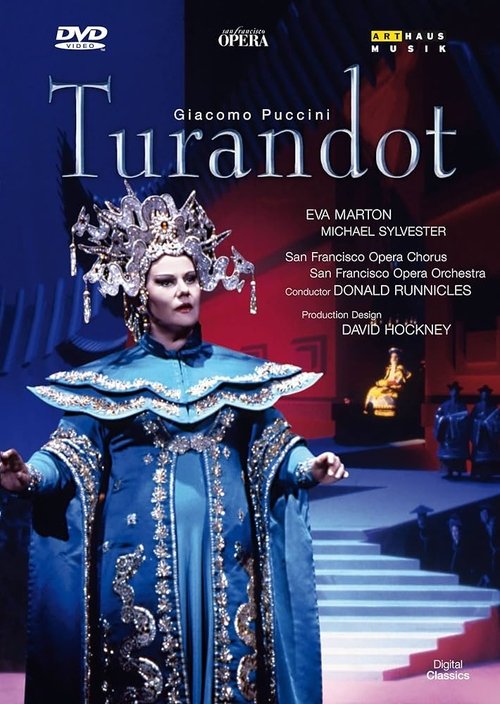
Puccini: Turandot (San Francisco Opera)
1994
No user ratings available yet
No diversity score available
1980
Director
Brian Large
Runtime
146 minutes
Average Rating
No ratings yetSynopsis
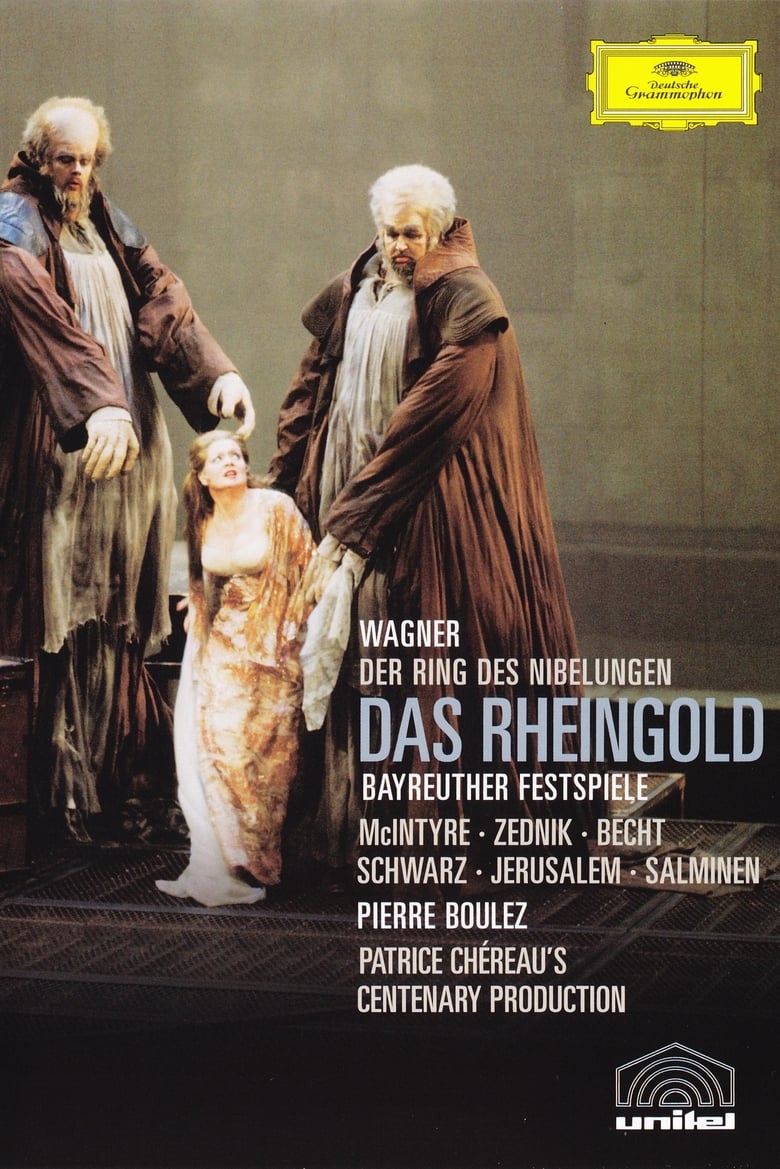
This is a beautifully conducted and thoughtfully staged performance of the first opera (the prologue) in Wagner's Ring Cycle. As soon as the clouds of mist have dissipated, while the daring, long-held opening chord is still reverberating, the screen clears to show not only the River Rhine and the three maidens (dressed like prostitutes in this production) assigned to guard the gold hidden there. It also shows an enormous dam (not mentioned in Wagner's text). This is the underwater base of a hydroelectric plant, and its presence tells us two things immediately: that this production takes the story out of the vaguely medieval fantasy world in which Wagner had placed it, and that a basic theme of the four-opera cycle would be power. Alberich, the Nibelung, is willing to renounce the love of women, after stealing the gold from the Rhine, to become the ruler of the world. Another basic theme is greed.
Overall Score
Limited
Category Breakdown
LGBTQ+ Representation
The production follows the traditional libretto, focusing on Alberich's renunciation of romantic love to gain power. There is no evidence of queer-coded subtext or non-cisnormative identities.
Gender Representation
The narrative reinforces patriarchal hierarchies, with Wotan acting as the central authority. Female characters, like the Rhine maidens, serve as catalysts for male conflict rather than autonomous agents.
Racial & Ethnic Diversity
Casting adheres to traditional European archetypes common in high-art opera of this era. The production maintains a homogeneous aesthetic without diverse ethnic representation.
Religious & Cultural Diversity
The staging disrupts traditional myth by replacing a magical landscape with a hydroelectric plant. This reframes the story as a critique of industrialism and systemic greed.
Disability Representation
No visible or invisible disabilities are central to the character arcs or the narrative progression.
Strengths
Areas for Improvement
AI Analysis
This production of *Das Rheingold* presents a striking tension between its conservative demographic casting and its subversive thematic staging. While the performers reflect traditional European archetypes and the gender dynamics remain rooted in patriarchal power structures, the visual direction offers a modern critique of authority. By transforming the Rhine into an industrial site, the film moves away from medieval fantasy toward a materialist exploration of resource control. This shift provides a sophisticated commentary on greed and systemic corruption, even as the interpersonal representation remains conventional.
1994
2005
2001
2003
1989
1987
2015
1941
1987
1995
2007
1974
No reviews yet. Be the first to share your thoughts on this movie!
Use the rating form above to leave a star rating and optional review.