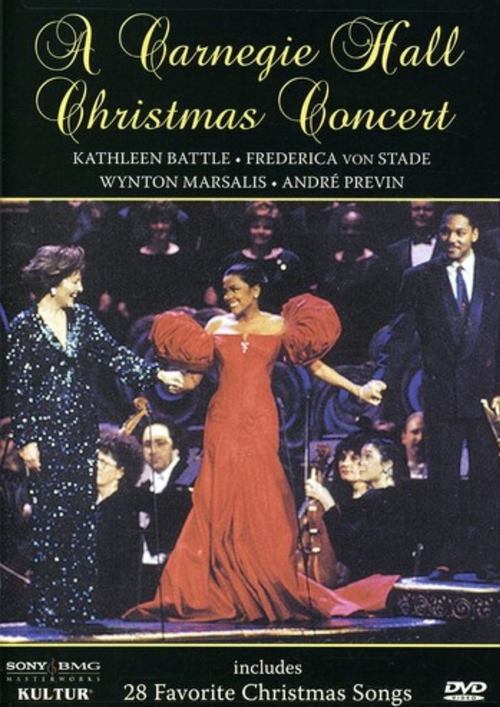
A Carnegie Hall Christmas Concert
1991
No user ratings available yet
Diversity score: 2.9 out of 10
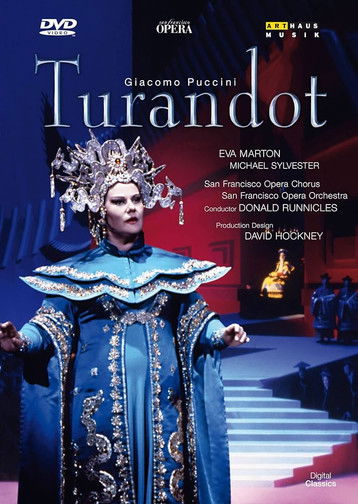
1994
TV-GDirector
Brian Large
Runtime
123 minutes
Average Rating
No ratings yetSynopsis
Donald Runnicles directs the San Francisco Opera in this lavish production of Giacomo Puccini’s final masterpiece, which was left unfinished upon his death and was later completed by Franco Alfano. Declaring himself a suitor of the beautiful Princess Turandot (Eva Marton), the son of a conquered king (Michael Sylvester) must correctly answer three troublesome riddles. According to tradition, if he fails, it will mean his death.
Overall Score
Limited
Category Breakdown
LGBTQ+ Representation
The production centers on a heteronormative romantic struggle between Prince Calaf and Princess Turandot. No non-cisnormative identities or same-sex intimacy are depicted.
Gender Representation
Princess Turandot acts as a figure of lethal authority, disrupting standard hierarchies through her intellectual and physical dominance. However, her agency is eventually subsumed by the male protagonist's romantic persistence.
Racial & Ethnic Diversity
The work utilizes an Orientalist framework to interpret an ancient Chinese setting through a Western lens. Casting prioritizes vocal ranges over ethnic matching, leaning toward exoticization.
Religious & Cultural Diversity
The narrative reinforces classical hierarchies and Western artistic traditions. It depicts a stratified royal court where state-sanctioned violence is a normalized tool of monarchical power.
Disability Representation
Characters are presented as idealized operatic archetypes. There are no visible or documented depictions of physical or neurodivergent disabilities.
Strengths
Areas for Improvement
AI Analysis
This San Francisco Opera production of *Turandot* is a traditionalist staging that prioritizes vocal excellence and classical dramatic structures. It adheres strictly to the late Romantic era's conventions, focusing on high-stakes romantic obsession and monarchical authority. The work relies heavily on Orientalist tropes, interpreting an East Asian setting through a Western operatic lens. This approach favors aesthetic exoticism over contemporary cultural authenticity or intersectional representation. While the production offers a nuanced portrayal of female power through Turandot's initial dominance, the narrative ultimately follows a traditional trajectory. The story remains rooted in historical myth and Western romanticism rather than modern sociopolitical critique.
1991
1980
1987
1954
1935
2004
2015
2001
1998
2002
1980
2013
No reviews yet. Be the first to share your thoughts on this movie!
Use the rating form above to leave a star rating and optional review.