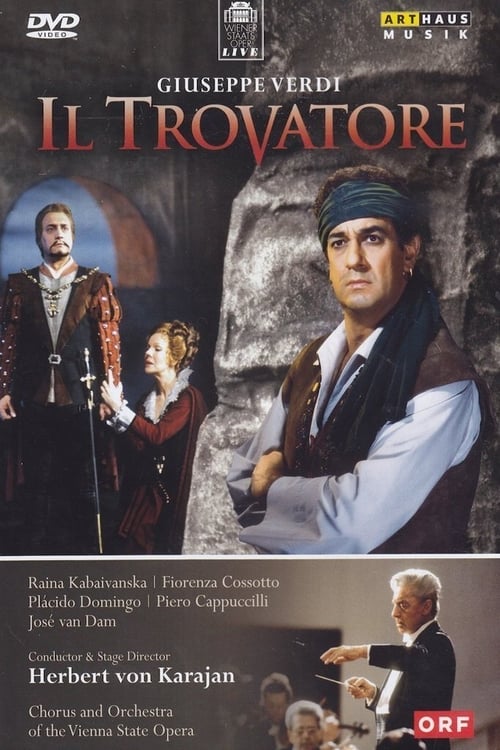
Il Trovatore - Verdi
1978
No user ratings available yet
Representation score: 3.0 out of 10
Representation Score
Fair
1989
Director
Brian Large
Runtime
157 minutes
Average Rating
No ratings yetNew Showbiz Analysis
This production of Verdi's opera functions as a study of systemic power and the individual's struggle against oppressive institutions. It moves beyond a simple military epic by centering the political and emotional ability to act of underrepresented figures. The narrative effectively uses the tension between Ethiopian and Egyptian identities to explore ethnic hierarchy and displacement. While the aesthetic follows traditional operatic conventions, the core conflict highlights the moral ambiguity of imperial power. However, the work remains limited by its adherence to traditional heterosexual romantic structures and a lack of representation regarding disability or non-binary gender identities.
Category Breakdown
The story focuses on romantic conflicts between Radamès, Aida, and Amneris. While the interpersonal dynamics are emotionally complex, the narrative stays within traditional heterosexual boundaries and does not depict non-binary gender identities.
Female characters like Aida and Amneris drive the psychological tension. The film challenges patriarchal norms by emphasizing the internal complexities and ability to act of these women.
The plot explores the friction between Ethiopian and Egyptian identities. It highlights themes of displacement and the 'othering' of non-Egyptian subjects within an imperial hierarchy.
The production critiques imperialist structures and the weight of state authority. It frames the protagonist's struggle as a choice between personal truth and nationalistic duty.
There is no evidence of characters navigating physical or neurodivergent disabilities within this production.
Present on Screen
Limited or Absent
Official Synopsis
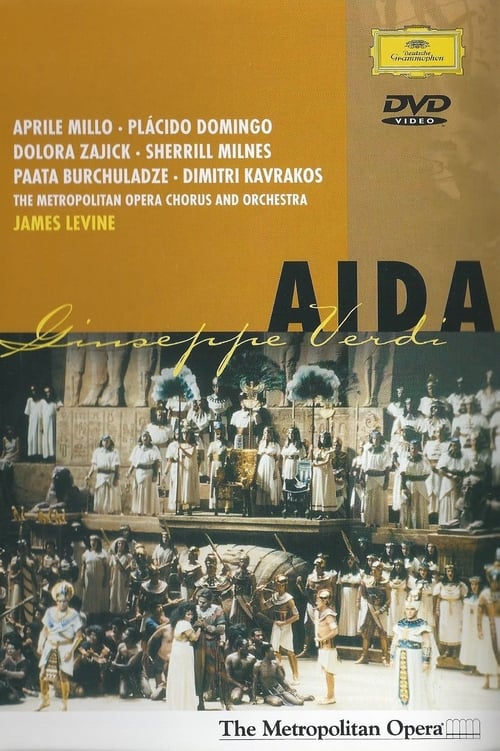
AIDA, an Ethiopian princess, is captured and brought into slavery in Egypt. A military commander, Radamès, struggles to choose between his love for her and his loyalty to the Pharaoh. To complicate the story further, Radamès is loved by the Pharaoh's daughter Amneris, although he does not return her feelings. Sonja Frisell’s production captures all the grandeur and excitement of Verdi’s monumental opera, particularly the great triumphal scene where the Egyptian army, led by Radamès (Plácido Domingo), returns victorious from war. Aprile Millo is Aida, the slave girl whose love for Radamès has her squaring off with Amneris (Dolora Zajick), the Egyptian princess who also loves him. Sherrill Milnes is Amonasro, and James Levine leads The Metropolitan Opera Orchestra, Chorus, and Ballet.
1978

1998
1953
1964
2001
1954

1975
1975
No reviews yet. Be the first to share your thoughts on this movie!
Use the rating form above to leave a star rating and optional review.