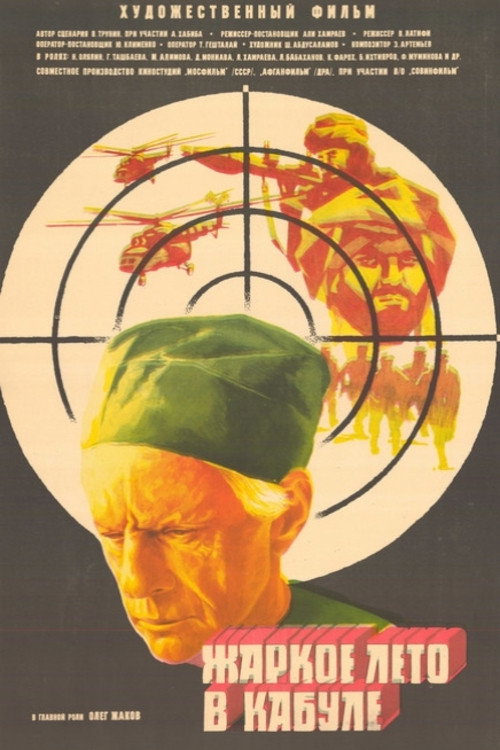
Hot Summer in Kabul
1983
No user ratings available yet
Representation score: 7.1 out of 10
Representation Score
Fair
1989
Director
Georgiy Kuznetsov
Runtime
83 minutes
Average Rating
No ratings yetNew Showbiz Analysis
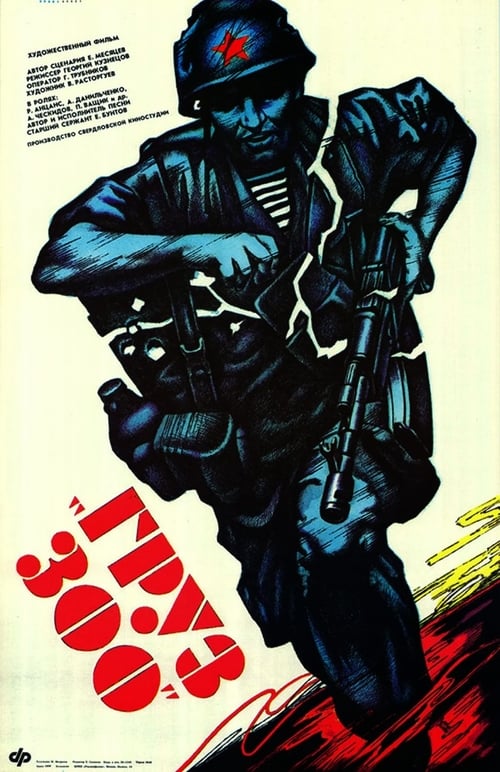
Cargo 300 is a grim deconstruction of the war epic that eschews traditional heroism for a study of systemic failure. It excels in its cultural critique, using the Soviet-Afghan War to challenge imperialist structures and the romanticization of military duty. However, the film is deeply limited by its narrow demographic scope. It lacks gender diversity and any representation of LGBTQ+ identities, remaining confined to a rigid, patriarchal military setting. While it uses physical injury to underscore the brutality of conflict, it does not provide meaningful roles for characters with disabilities.
Category Breakdown
The film does not include any characters or narratives that explore LGBTQ+ identities. It operates within a framework that assumes everyone is straight and cisgender.
The story focuses almost entirely on male combatants and military personnel, with very little representation of women. It emphasizes a masculine-coded environment of combat and survival, lacking women's ability to drive the story.
The narrative involves interactions between Soviet personnel and Afghan Mujahideen. While it highlights geopolitical tensions, the representation remains largely functional to the plot.
The film provides a sophisticated critique of imperialist expansion and state-sanctioned violence. It challenges traditional patriotic heroism by focusing on the trauma of a collapsing military machine.
Physical trauma is a central theme, with the title referencing the wounded and dead. However, injuries are used primarily as narrative devices rather than providing meaningful roles for characters with disabilities.
Present on Screen
Limited or Absent
Official Synopsis
Afghanistan. 1986. From the border towards Kabul on a mountain road moving column of Soviet military armored vehicles. From the air it is covered by combat helicopters. The way of the column lies through the only bridge in these parts. This is well aware of the Afghan Mujahideen and under the leadership of American instructors are preparing an operation to capture the bridge and destroy the Soviet equipment blocked in this case. At this time, located in the mountains of the Soviet geological expedition undergoes a night attack spooks. The Afghan guards scatter and the geologists decide to go to Kabul. On the way, they are informed about the approaching military column, from which they will be much safer to get to Kabul. They do not know only one that has long enabled the Mujahideen in the operation to capture the bridge.
1983

1988

1984

1977

2009
2019
1992
2008
No reviews yet. Be the first to share your thoughts on this movie!
Use the rating form above to leave a star rating and optional review.