
Five Days in Sinai
1968
No user ratings available yet
Representation score: 1.7 out of 10
Representation Score
Fair
1986
Director
Rafi Bukai
Runtime
84 minutes
Average Rating
No ratings yetNew Showbiz Analysis
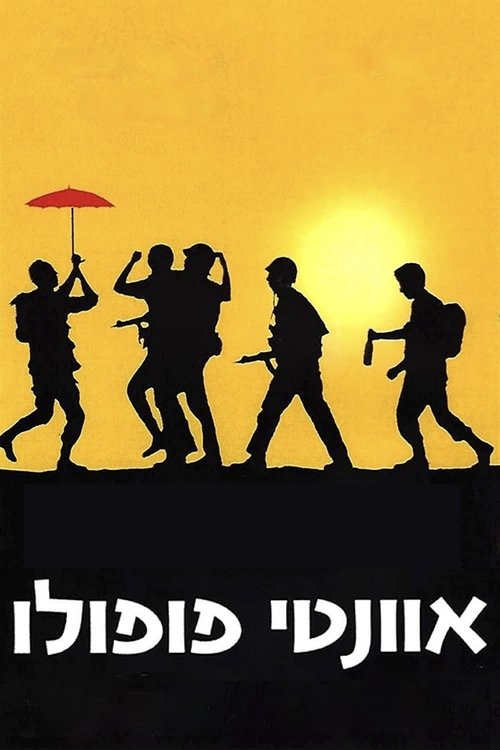
Avanti Popolo is a historical drama that prioritizes situational realism over diverse representation. It examines the breakdown of military and social hierarchies during the 1967 Six-Day War. While the film lacks diversity in terms of gender, disability, and LGBTQ+ identities, it offers a sophisticated critique of authority. It portrays state and military institutions as unstable forces rather than righteous entities, emphasizing the struggle of individuals against geopolitical shifts. Ultimately, the film's strength lies in its cultural depth and postmodern approach to power, despite its narrow demographic scope.
Category Breakdown
The film does not prominently feature non-binary or LGBTQ+ identities. The wartime context limits the exploration of queer identity.
The story emphasizes traditional gender roles typical of its wartime setting. Male characters play key roles in navigating the Sinai desert through masculine-coded survival.
Characters are defined by the ethnic identities relevant to the 1967 conflict. The film includes Egyptian soldiers, providing non-Western perspectives.
The film stands out by challenging institutional power and nationalism. It highlights the subjective experiences of outsiders rather than glorifying military institutions.
There are no characters with disabilities given significant roles. The film focuses on able-bodied protagonists and omits neurodivergent or physical complexities.
Present on Screen
Limited or Absent
Official Synopsis
On June 11, 1967, the Six-Day War ended and ceasefire began. Egyptian soldiers Gassan and Haled journey through the Sinai desert to reach the Suez Canal, encountering Israeli soldiers and a news reporter.
1968

2009

1994

1983

1986

1971

1975

1955
No reviews yet. Be the first to share your thoughts on this movie!
Use the rating form above to leave a star rating and optional review.