
Castle of the Banned Lovers
1956
No user ratings available yet
Diversity score: 4.3 out of 10
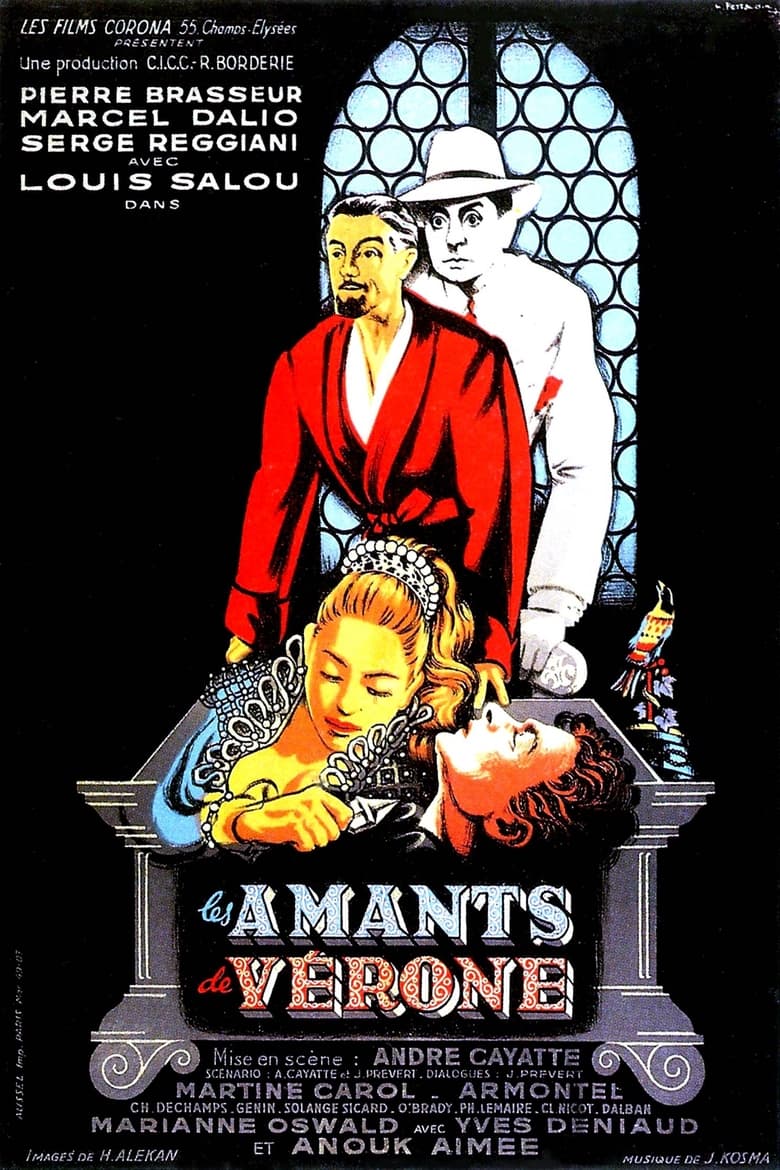
1949
Director
André Cayatte
Runtime
105 minutes
Average Rating
No ratings yetSynopsis
Angelo, a glass-blower from Murano, and Georgia Maglia, the pretty daughter of a fallen fascist magistrate, are chosen to be the stand-ins for the stars of a film version of "Romeo and Juliet" being shot on location in Venice and Verona. It is not long before they fall in love and their romance parallels that of Shakespeare's timeless heroes. Indeed their union is threatened by the schemings of Raffaele, the Maglia family's dubious tout...
Overall Score
Fair
Category Breakdown
LGBTQ+ Representation
The narrative focuses on a heteronormative romance between Angelo and Georgia. There is no evidence of non-cisnormative identities or critiques of heteronormativity.
Gender Representation
Georgia's personal agency and romantic choices drive the plot, offering moderate subversion of her father's political legacy. However, the story follows a traditional romantic arc.
Racial & Ethnic Diversity
The setting suggests a culturally specific European milieu centered on class distinctions. There is no explicit evidence of racial or ethnic diversity within the narrative.
Religious & Cultural Diversity
The film critiques traditional Western political structures through the lens of a fallen fascist magistrate. It explores the moral ambiguity of social climbers and decaying authority.
Disability Representation
There is no information regarding the depiction of physical, sensory, or neurodivergent identities in this work.
Strengths
Areas for Improvement
AI Analysis
The film functions as a meta-narrative that uses a film-within-a-film structure to explore class and social mobility. By centering the romance of two non-celebrity stand-ins, it disrupts traditional star hierarchies and prioritizes the agency of working-class individuals. While the film offers social critique regarding political decay and the instability of established hierarchies, it remains rooted in a traditional mid-century dramatic framework. The storytelling prioritizes class-based dynamics over identity-driven representation. Ultimately, the lack of explicit intersectional diversity results in a score that reflects a socially conscious but largely conventional approach to character and identity.
1956
1957
1978
2010
2000
1976
1960
1959
1948

1983
1934
1963
No reviews yet. Be the first to share your thoughts on this movie!
Use the rating form above to leave a star rating and optional review.