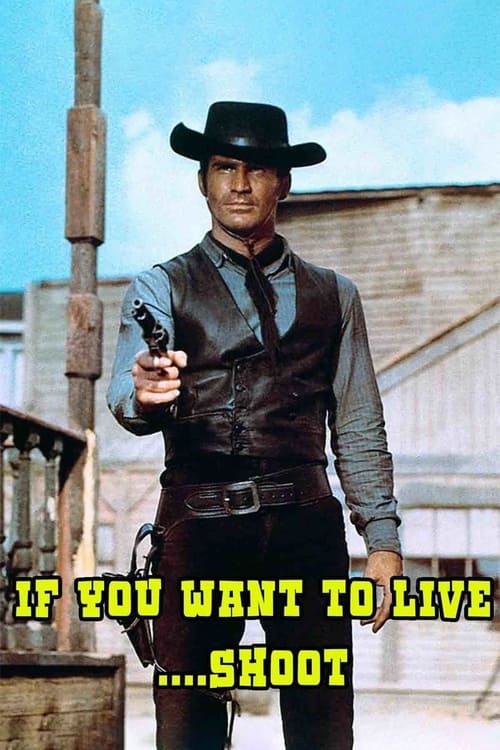
If You Want to Live... Shoot!
1968
No user ratings available yet
Representation score: 0.9 out of 10

Representation Score
Minimal
1977
PGDirector
Paul Hunt
Runtime
95 minutes
Average Rating
No ratings yetNew Showbiz Analysis
The Great Gundown opens on a sun-bleached desert, establishing a lawless borderland where violence is the only currency. Directed by Paul Hunt, this 1977 Western pits a weary lawman against a gang of outlaws, with Robert Padilla’s Mario Ochoa "The Savage" serving as the most competent and disciplined fighter. The film’s argument is that the old West is dead, replaced by a gritty reality where race and violence define hierarchy. Padilla’s character is framed as a primal force, yet the camera respects his skill, treating his violence as efficient rather than comedic. The sold meaning is that competence is the only true merit, but the narrative structure still privileges the white lawman’s survival. Richard Rust’s character is portrayed as noble and exhausted, while the outlaws are destroyed by their own greed and paranoia. The woman, Malila Saint Duval, remains the passive prize, never paying for the violence around her. The film’s internal logic pulls apart: it shows the "Savage" as more disciplined than the "civilized" gang members, yet the moral verdict still rests with the lawman. The last image is not a romantic embrace but a weary look toward the horizon, rewarding survival over victory. The outlaw system collapses only when its own violence turns inward, leaving the land in ruins. The film does not judge the guns; it shows their consequences. The moral is that survival is the only victory, and the law, though slow and underfunded, remains the default authority. The camera loves the lawman’s exhaustion, framing it as noble, while the "Savage" is treated with a mix of fear and respect. The film’s argument is thin, but the pictures are clear: the old West is dead, but the hierarchy remains.
Category Breakdown
No queer characters or relationships appear. The 1977 Western ignores sexual identity entirely, offering no thematic engagement with LGBTQ+ issues.
Malila Saint Duval acts as a passive moral anchor. Male characters drive the plot through violence, leaving women as objects of protection rather than agents.
Robert Padilla stars as Mario Ochoa, a competent Latino outlaw. He challenges the white default with skill, yet retains the colonial label 'The Savage.'
The law is portrayed as weary and underfunded. The narrative rewards the lawman’s survival over the outlaw’s competence, preserving traditional authority structures.
No characters are depicted with disabilities. Physical ability is framed solely as a weapon for survival and combat in this violent setting.
Present on Screen
Limited or Absent
Official Synopsis
Mario, weary of killing for pay, leaves his gang to return home to his wife and son who assumed him long dead. Now he is hunted by both sides of the law and shunned by his wife.
1968
1956

1966
1967
1965
1967
1964
1971
No reviews yet. Be the first to share your thoughts on this movie!
Use the rating form above to leave a star rating and optional review.