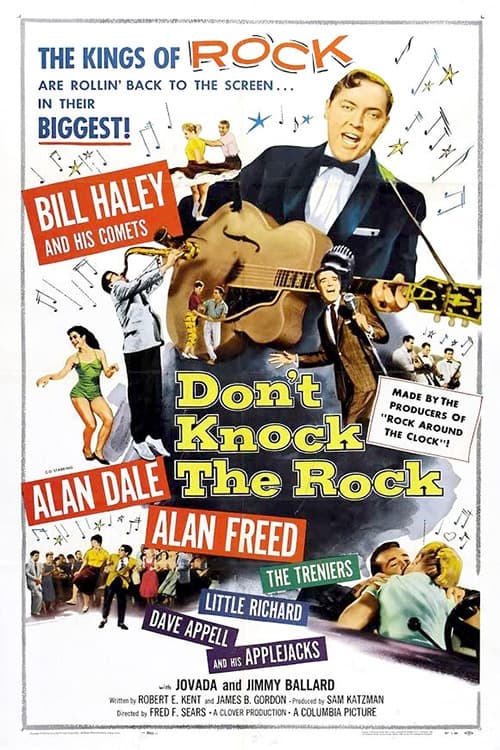
Don't Knock The Rock
1956
No user ratings available yet
Diversity score: 3.0 out of 10
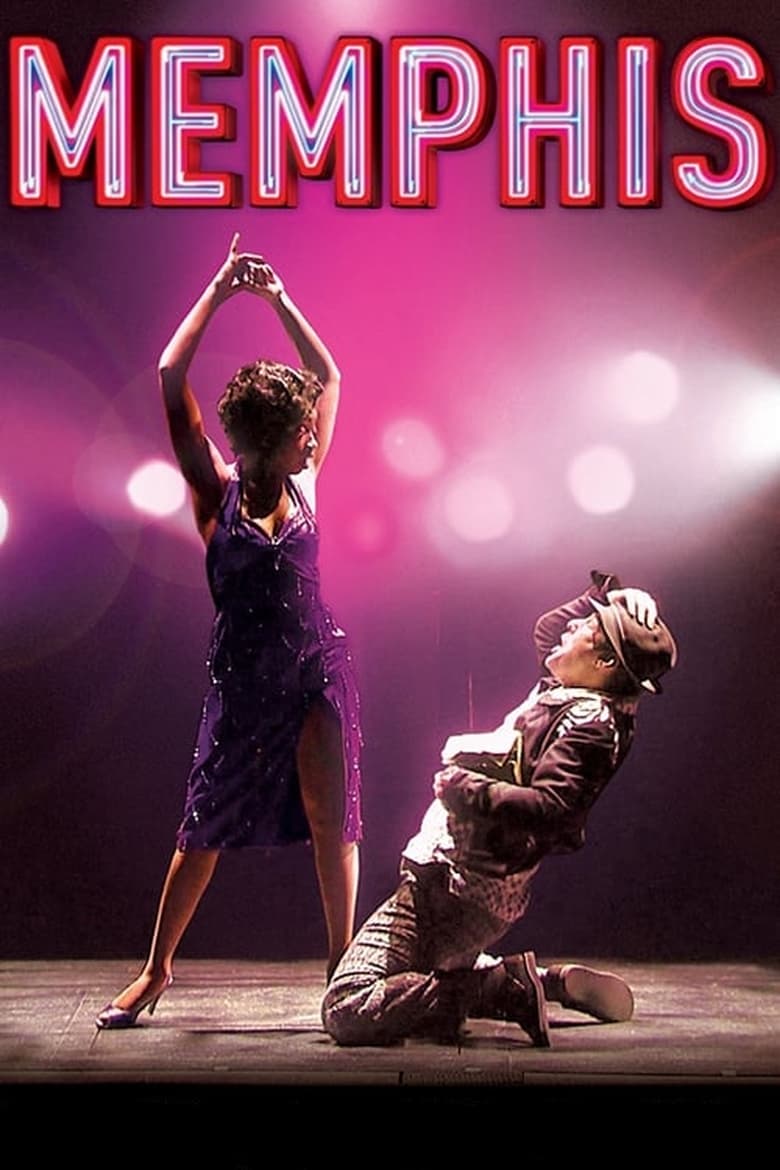
2011
Not RatedDirector
Don Roy King
Runtime
165 minutes
Average Rating
No ratings yetSynopsis
Memphis is set in the places where rock and roll was born in the 1950s: the seedy nightclubs, radio stations and recording studios of the musically-rich Tennessee city. With an original score, it tells the fictional story of DJ Huey Calhoun, a good ole' local boy with a passion for R&B music and Felicia Farrell, an up-and-coming black singer that he meets one fateful night on Beale Street. Despite the objections of their loved ones (Huey's close-minded mama and Felicia's cautious brother, a club owner), they embark on a dangerous affair. As their careers rise, the relationship is challenged by personal ambition and the pressures of an outside world unable to accept their love. Originally shown in select theatres, then broadcast as an episode of the PBS series "Great Performances" (season 39, episode 11).
Overall Score
Good
Category Breakdown
LGBTQ+ Representation
The film focuses on a cross-racial romance rather than queer identity. The central conflict stems from racial and social boundaries of the 1950s rather than non-heteronormative orientations.
Gender Representation
Felicia Farrell is depicted with professional agency as a rising singer. While Huey Calhoun follows a traditional masculine protagonist framework, the emotional weight is shared through Felicia's career ascent.
Racial & Ethnic Diversity
The story centers on the collision of Black R&B culture and white mainstream radio. By making a biracial romance the core driver, the film actively disrupts 1950s racial hierarchies.
Religious & Cultural Diversity
The narrative critiques traditional social structures and family obstacles. It uses the transformative power of music to challenge the rigid social norms and systemic oppression of the era.
Disability Representation
There are no visible or invisible disabilities depicted or central to the character arcs in this story.
Strengths
Areas for Improvement
AI Analysis
Memphis uses the historical friction of the 1950s to explore systemic barriers and individual agency. The film succeeds by centering a biracial romance and elevating the professional agency of a Black female lead within a segregated landscape. While the narrative lacks explicit LGBTQ+ or neurodivergent representation, it provides a sophisticated lens on American musical history. It moves beyond tokenism by making Black R&B culture a primary driver of the plot. The film effectively deconstructs mid-century social norms by framing the protagonists' relationship as a direct challenge to the status quo and traditional family structures.
1956
1980
1946
1948
2007
2006
1992
2009
2011
2002
1976
1991
No reviews yet. Be the first to share your thoughts on this movie!
Use the rating form above to leave a star rating and optional review.