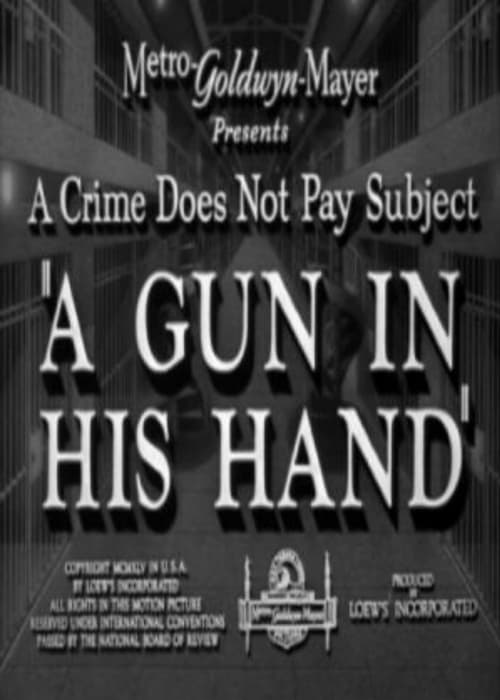
A Gun in His Hand
1945
No user ratings available yet
Representation score: 0.7 out of 10

Representation Score
Minimal
1944
PassedDirector
Walter Hart
Runtime
20 minutes
Average Rating
No ratings yetNew Showbiz Analysis
Easy Life is a traditional moralistic crime drama that prioritizes social stability over representation. As part of the MGM 'Crime Does Not Pay' series, the film functions to reinforce existing hierarchies through a cautionary framework. The narrative is heavily centered on male protagonists and follows mid-century Anglo-centric norms. It lacks the intentionality needed to disrupt conventional formulas, instead validating the social and legal structures of the time. Ultimately, the film serves as a tool for social instruction, emphasizing the consequences of deviating from established paths like education and law.
Category Breakdown
The film adheres to the assumption that everyone is straight or cisgender. There are no visible LGBTQ+ characters or stories that challenge this norm.
The story centers on a male-dominated hierarchy involving a young man and a gang of thieves. Women appear to occupy passive or domestic roles without taking a leading role in the plot.
The production reflects the homogeneous casting standards of 1944. The narrative follows traditional Anglo-centric norms common in mid-century American crime dramas.
The film serves as a didactic cautionary tale about education and law. It reinforces Western values and the legitimacy of state institutions rather than critiquing them.
There is no evidence of characters with visible or invisible disabilities within the narrative.
Present on Screen
Limited or Absent
Official Synopsis
In this entry in the MGM "Crime Does Not Pay" series young Frank Davis, dropping out of school and joining a small-time hoodlum gang, finds out that leading a life of crime is not all he thought it would be.
1945
1931

1949

1937

1939
1945

1953
1955
No reviews yet. Be the first to share your thoughts on this movie!
Use the rating form above to leave a star rating and optional review.