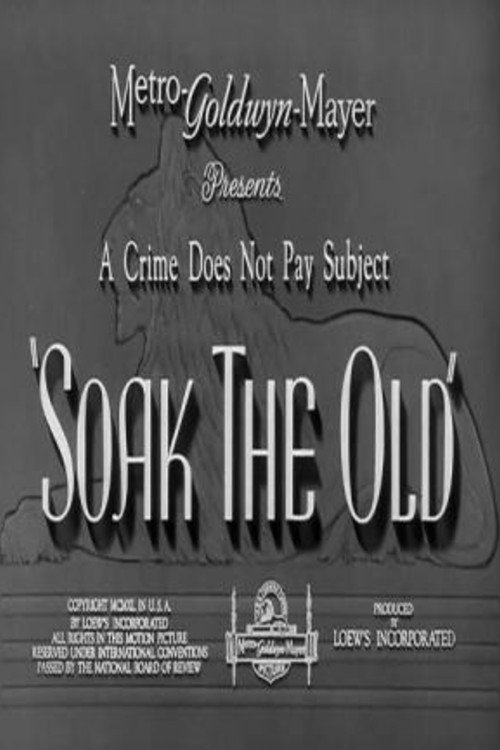
Soak the Old
1940
No user ratings available yet
Representation score: 0.6 out of 10
Representation Score
Limited
1941
ApprovedDirector
Roy Rowland
Runtime
19 minutes
Average Rating
No ratings yetNew Showbiz Analysis
Sucker List is a product of the traditional MGM studio system, functioning as a cautionary crime drama. The narrative structure is designed to reinforce mid-century social and moral norms rather than challenge them. The film's focus on a male-dominated criminal enterprise limits its scope to conventional masculine archetypes. It lacks the complexity needed to represent a broader range of human experiences. Ultimately, the short serves as a moralistic tool to uphold the status quo, reflecting the demographic norms and restrictive storytelling constraints of 1940s cinema.
Category Breakdown
The film does not include any characters with non-binary or LGBTQ+ identities. It adheres strictly to heterosexual norms typical of 1940s crime dramas.
The story centers on a male-dominated criminal enterprise, reinforcing traditional masculine roles and hierarchies common to the era.
The film likely reflects the homogeneous casting practices of 1940s Hollywood. There is no indication of diverse racial backgrounds or ability to act among the characters.
The story operates within a moralistic framework designed to uphold social stability. It portrays criminal behavior as destructive to reinforce the legitimacy of existing social institutions.
There is no evidence of characters with visible or invisible disabilities within the film's narrative or historical context.
Present on Screen
Limited or Absent
Official Synopsis
In this MGM Crime Does Not Pay series short, a man and his racketeer buddies devise a scheme to bilk those already seemingly desperate for money of what little they have.
1940
1950
1938
1947
1937
1937
1940
1941
No reviews yet. Be the first to share your thoughts on this movie!
Use the rating form above to leave a star rating and optional review.