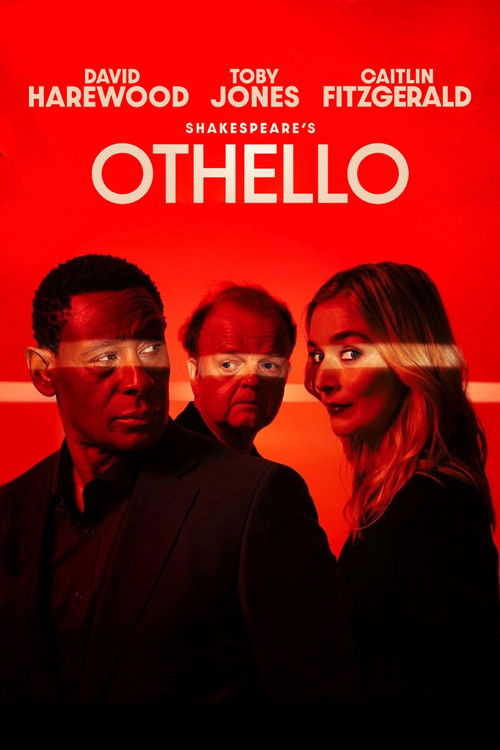
Othello
2026
No user ratings available yet
Diversity score: 6.8 out of 10
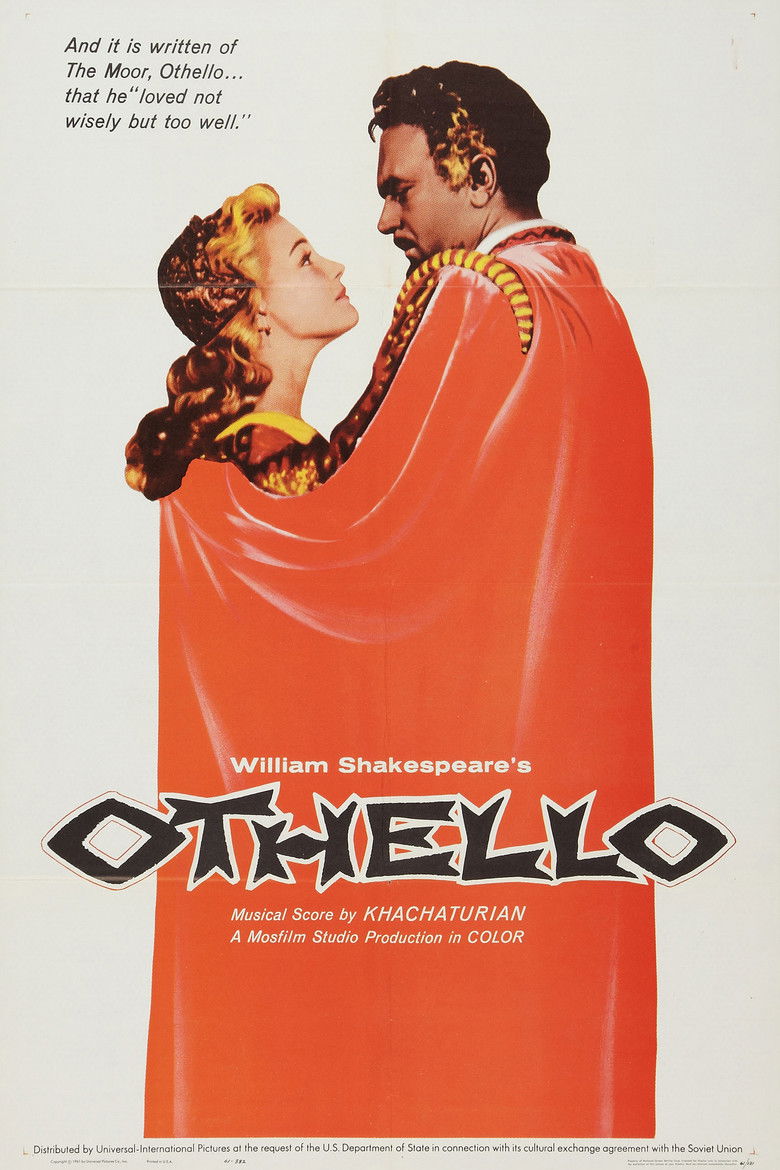
1955
Director
Sergei Yutkevich
Runtime
107 minutes
Average Rating
No ratings yetSynopsis
Othello, a celebrated Moorish general, secretly marries Desdemona, angering her noble father and inciting the envious Iago’s hatred. Sent to Cyprus, Othello’s victories are overshadowed by Iago’s manipulations: he frames Desdemona as unfaithful with Othello’s lieutenant Cassio. Consumed by jealousy, Othello murders his wife. Discovering Iago’s treachery too late, Othello kills himself as Cyprus learns the bitter truth.
Overall Score
Fair
Category Breakdown
LGBTQ+ Representation
The film lacks any depictions of non-heteronormative identities. Interpersonal dynamics are strictly confined to the central heterosexual marriage and the heteronormative structures of the Venetian military.
Gender Representation
Female agency is significantly constrained by traditional tragic structures. Desdemona serves primarily as a catalyst for male conflict rather than an independent driver of the plot.
Racial & Ethnic Diversity
The production disrupts Eurocentric traditions by casting a Black actor in the lead role. This highlights the tension between Othello's military status and the racial prejudices of Venetian society.
Religious & Cultural Diversity
The Soviet production explores power dynamics through a lens of tragic instability. It portrays Iago as a corrosive force that destabilizes established social and military orders.
Disability Representation
There are no significant depictions of physical or neurodivergent disabilities. The narrative focuses on psychological manipulation rather than the representation of specific disabilities.
Strengths
Areas for Improvement
AI Analysis
This Soviet adaptation of Shakespeare’s tragedy stands out for its intentional casting of a Black actor as Othello, which challenges the historical homogeneity often found in classical adaptations. This choice provides a nuanced look at racial identity and social alienation. However, the film remains tethered to traditional gender hierarchies. The female characters lack agency, functioning mostly as pawns in a male-driven psychological drama. The narrative reinforces patriarchal structures through its focus on male emotional volatility. Ultimately, while the film makes strides in racial representation, it lacks intersectional depth. The absence of LGBTQ+ narratives and disability representation keeps the overall diversity score moderate.
2026
1933
1915
1966
1970
1967
1945
1993
1951
1960
1953
2015
No reviews yet. Be the first to share your thoughts on this movie!
Use the rating form above to leave a star rating and optional review.