
Dona Flor e Seus Dois Maridos
2017
No user ratings available yet
Representation score: 5.6 out of 10
Representation Score
Fair
1987
Director
José Joffily
Runtime
91 minutes
Average Rating
No ratings yetNew Showbiz Analysis
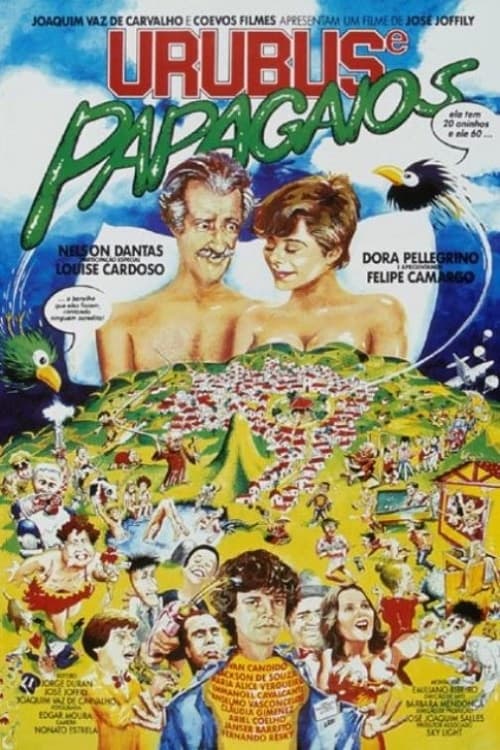
Urubus e Papagaios serves as a satirical critique of provincial social structures and patriarchal authority. It juxtaposes the rigid hierarchy of the judicial system against the visceral, irrational desires of a small-town community. The film disrupts traditional sanctity by using grotesque humor to deconstruct the myth of the untouchable patriarch. The judge's death and subsequent physical 'revenge' serve to subvert the dignity typically afforded to state figures. While the film lacks modern identity-based representation, it succeeds in challenging institutional stability. It replaces singular legalistic ideals with a subjective, absurd morality that highlights the friction between law and local life.
Category Breakdown
The film focuses on heterosexual impulses and the arousal of local men. There are no queer narratives or representations of diverse gender identities in the story.
The narrative uses the judge's wife as a catalyst for community disruption. Local wives actively participate in social upheaval through collective rituals, moving beyond passive domestic roles.
As a Brazilian production, the film operates outside Anglo-Saxon norms. However, the focus remains primarily on class and social standing rather than specific racial or ethnic characterizations.
The film critiques institutional religion through a carnivalesque lens. It depicts religious practices, such as novenas, being used for social sabotage, suggesting a skeptical view of traditional spiritual institutions.
The film provides no specific details or characters regarding physical or neurodivergent representation.
Present on Screen
Limited or Absent
Official Synopsis
High Court judge returns to the small town where he was born, bringing along his beautiful and young wife. The local men get aroused and start looking for young lovers at the local bordello. Their wives even make promises and novenas asking the disappearance of the new couple. One day, the judge dies, leaving his wife unsatisfied. The corpse, as if wanting revenge, keeps an erection on.
2017

1976

1971

1963
1976
1985
1970
1967
No reviews yet. Be the first to share your thoughts on this movie!
Use the rating form above to leave a star rating and optional review.