
The Loved One
1965
No user ratings available yet
Representation score: 6.0 out of 10
Representation Score
Fair
1967
NRDirector
Richard Quine
Runtime
86 minutes
Average Rating
No ratings yetNew Showbiz Analysis
This 1967 comedy serves as a psychological deconstruction of the bourgeois nuclear family. It successfully challenges the era's idealized domesticity by presenting a central maternal figure driven by emotional complexity and instability, rather than traditional submissiveness. However, the film's scope is narrow, focusing solely on the neuroses of a specific, white, upper-class demographic. Consequently, it lacks engagement with racial, ethnic, or LGBTQ+ identities, resulting in a limited diversity profile.
Category Breakdown
The film does not include any visible LGBTQ+ characters or narratives. The interpersonal dynamics are centered around a traditional heterosexual relationship, though it is highly dysfunctional.
The narrative challenges traditional gender roles by focusing on a complex, unstable maternal figure. This portrayal moves away from the 'perfect' maternal archetype and the typical submissive feminine role.
The cast is predominantly white, reflecting the socioeconomic homogeneity of the upper class in the 1960s. The story does not address racial or ethnic diversity.
The film critiques Western institutions by depicting the nuclear family as a site of instability. It avoids idealized domesticity but does not provide explicit political messaging.
There is no meaningful representation of visible or invisible disabilities. Psychological neuroses are presented as character traits rather than experiences of disability.
Present on Screen
Limited or Absent
Official Synopsis
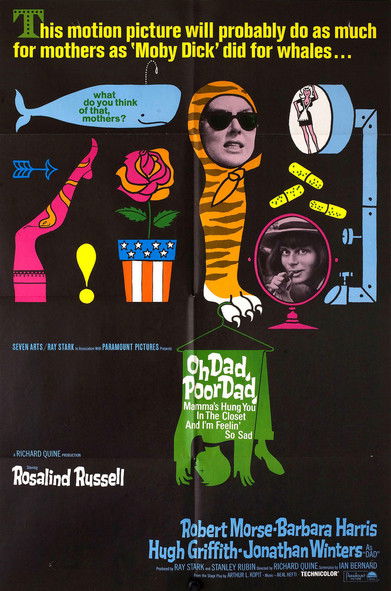
A woman brings her son and husband to a tropical vacation spot for a little rest and relaxation. The only problem is that the husband has been dead for quite some time, and his wife had him stuffed and carries him everywhere with her. Complications ensue.
1965
1964
1945
1969
1987
1964

2009

1982
No reviews yet. Be the first to share your thoughts on this movie!
Use the rating form above to leave a star rating and optional review.